

Victims’ rights are finally increasing in recognition and have become part of many agendas of EU national governments’ agendas. Key European milestones include the 1985 UN Declaration, the 2012 EU Victims’ Rights Directive (2012/29/EU), and the 2025 reforms strengthening helplines, support for vulnerable victims, and protection against secondary victimisation.
While the recognition and advancement of victims’ rights is fundamental, these rights often remain largely unapplied, existing more on paper than in practice. Awareness is an important factor in supporting victims, but concrete commitments and actions are equally necessary.
To address this gap, the European Commission adopted its first-ever EU Strategy on Victims’ Rights (2020–2025). The main objective of this strategy was to ensure that all victims of crime, regardless of where in the EU or under what circumstances the crime occurred, can fully rely on their rights. To this end, the strategy outlines concrete actions to be undertaken by the European Commission, Member States, and civil society.
Having already made the victims agenda a priority, the Maltese government also committed to establishing a Victims’ Rights National Strategy (VRNS). Taken forward by Victim Support Agency (VSA) – the all-crime victim support organisation operating under the Ministry for Home Affairs, Security and Employment – the Strategy is due to be finalised in the coming weeks.
The strategy is being developed within the framework of the “Improving National Victim Support Frameworks in Estonia, Malta and Portugal” (IMPACT) project, implemented by Victim Support Europe (VSE) in partnership with VSA. The project funded by the European Commission, aims to strengthen national victim support systems and enhance the protection and rights of victims across the three participating countries.
Why there is the need for this strategy?
In Malta, several laws aim to recognise and strengthen victims’ rights, most notably the Victims of Crime Act. Yet this raises an important question: why is there still a need for a National Victims’ Rights Strategy? Although the country already has an established legal framework and support mechanisms, these require better organisation and coordination.
A national strategy will set out plans for concrete, targeted, and coordinated actions, to be implemented by both governmental and civil society entities, working together to enhance and strengthen victim support in Malta.
As Mr Levent Altan, Executive Director of Victim Support Europe, aptly notes: “If you want to genuinely make a difference for victims, you can’t do it without having a strategic framework in place. A whole range of protections for victims require long-term action, which must be planned over five to ten years to deliver. By having these strategies in place, you ensure continuity of progress”.
A strategy provides clear direction, follow-up actions, criteria, collaboration, and partnerships, and recognises that multi- and interdisciplinary, collaborative work is fundamental to ensuring a coherent way forward.
“To teach us more about our society and where we need to grow. To support victims and professionals in a more structured and cohesive way” (Maltese professional).
As stated by Mr Brian Farrugia, Victim Support Agency CEO, “This Strategy is not just a policy choice but an assurance for Victims of Crime to consistently access justice, care and restitution at ease. Transforming society from one that reacts to harm into one that actively upholds safety, accountability and compassion”.
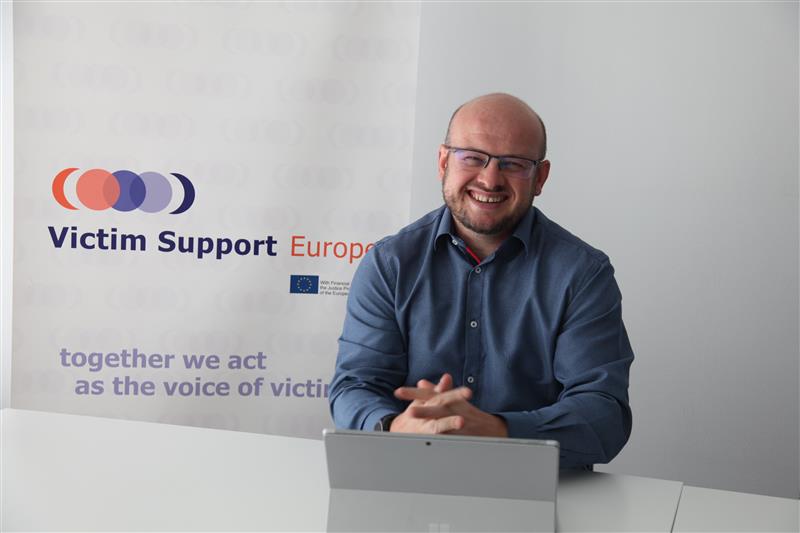
Levent Altan, Executive Director of Victim Support Europe
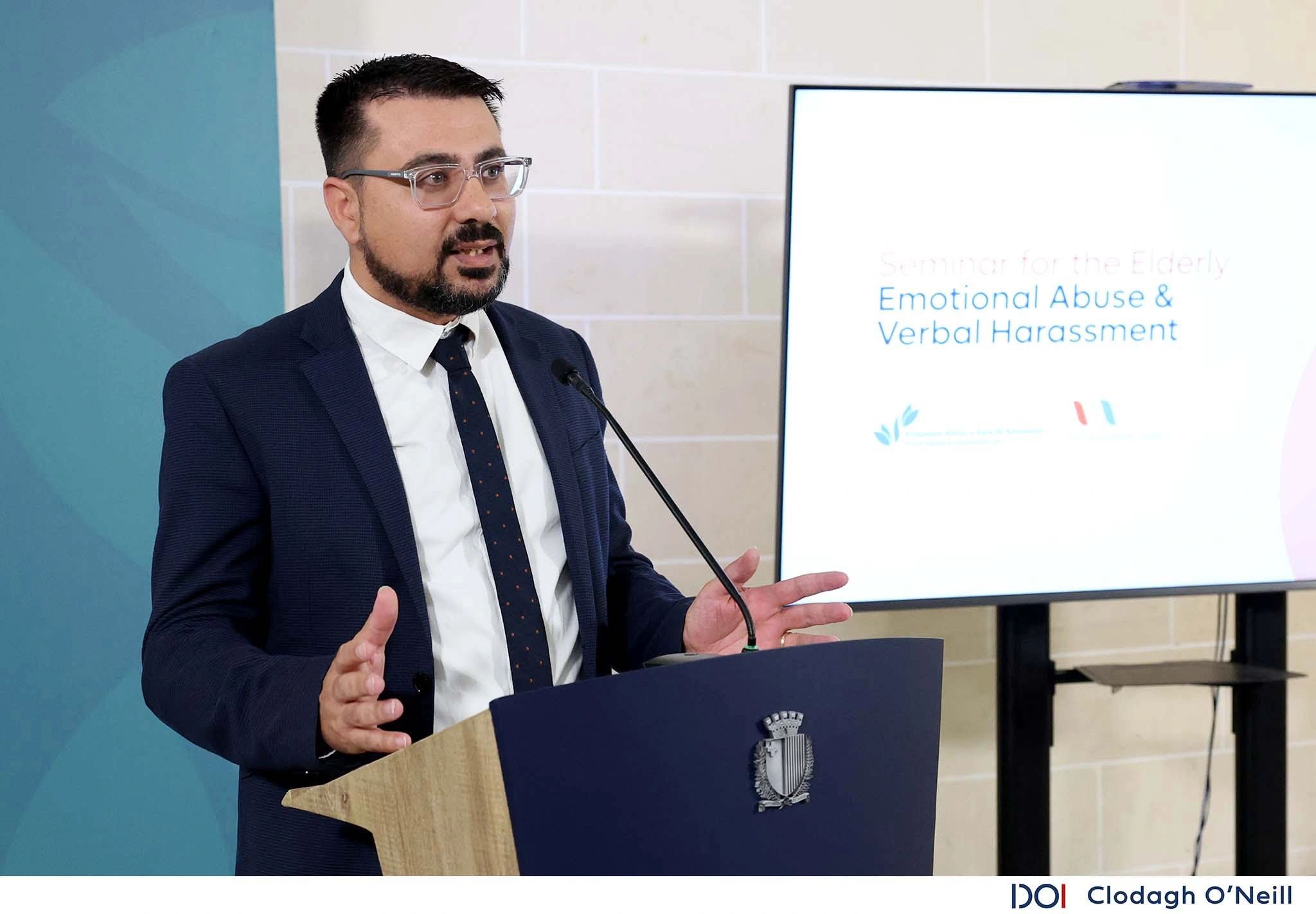
Brian Farrugia, Victim Support Agency CEO
Process & Implementation
The process for the development of the Maltese VRNS commenced in in early 2025 and is to conclude in the first half of 2026. It included broad and extensive research and consultation efforts at both national and international levels.
A national strategy is not only about the end product, but the process also followed is just as important. When done right, it can build long-lasting relationships, establish trust across actors and sectors, and help map out the challenges, needs, and resources required to solve problems.
The Strategy development process followed an extensive participatory approach, including multiple focus groups, working groups, one-to-one interviews, and desk research. In total, around 65 organisations were involved in creating and agreeing on the Strategy. This means it will not only address their needs, but they are also fully committed to its implementation. Dr Aitana Radu (Lecturer and Security Research Coordinator at the University of Malta), leader of the VRNS’ technical development and member of the VSE Malta Country Team stated that the process has been a very positive development in terms of victims’ rights in Malta, as it gave so many different Maltese practitioners an opportunity to discuss their concerns, understand each other’s roles better, and finally work together on designing solutions for the future”.
“Collaboration creates a sounder scaffolding in the support system, also more accountability and efficiency and effectiveness”. (Maltese professional)
“This collaborative process ensures that the response is well-rounded, effective, and tailored to the complexities of each individual’s needs”. (Maltese professional)
The adoption of the Strategy is only the first step. It is well known that the greatest challenge for any strategy lies in its implementation. To address this, numerous actions are planned for the five-year implementation period to ensure it genuinely results in change. Monitoring activities will assess progress in implementing the planned actions, identify operational challenges, and propose corrective measures, with a view to ensuring timely and high-quality delivery. VSA will be the entity responsible for the implementation and monitoring of the Strategy. The VRNS will include an Action Plan with strategic objectives that national entities, both governmental and civil society, will commit to pursue. In this way, “Action and Unity into purpose through a coordinated national approach, proves that that no victim is left behind”. (Mr Brian Farrugia).

Dr Aitana Radu, Lecturer and Security Research Coordinator at the University of Malta
Victims’ involvement
A key element in the development of the VRNS was the involvement of victims, to ensure that their voices and experiences were heard and reflected in the Strategy. As Mr Altan stated, “Involving victims is essential, they are the ones who know best whether the system works for them What we believe a victim might feel is second-hand information, we can only know for sure if we listen to them”.
VSE liaised with selected Maltese frontline organisations that support victims of different crimes and backgrounds, including migrants, persons with physical disabilities, and LGBTIQ+ individuals. This engagement aimed to review the Strategy and to gather victims’ perspectives on specific recommendations, including their perceived usefulness and any areas of disagreement, to ensure that the final recommendations reflect victims’ best interests. Ms Sara Fontanot, VSE IMPACT Project Assistant, added in this regard that: “In this way, we not only included victims’ voices in the Strategy, as they are its main target, but also empowered victims by sharing their survival experiences and shaping a national process – they are not only stakeholders, but actors in it”. Dr Radu explained further “Integrating victims’ words and stories into the strategy was a conscious choice as we very much wanted to remind policymakers and practitioners that this document has the potential of changing the lives of so many different individuals for the better and it is their hopes and experiences which should guide us when striving to improve the existing victims’ rights framework”.

Sara Fontanot, VSE IMPACT Project Assistant
Hopes & Foreseen Impact
The VRNS has been created as an effective and concrete tool to support victims and professionals, while strengthening the overall victim support framework. In this context, the aim is to develop a strategy that brings about real systemic change, rather than merely outlining rights on paper.
“I expect the strategy to inspire and empower professionals working in this field, encouraging them to continue providing holistic support to victims, while enhancing the quality of services.” (Maltese professional)
While the Strategy seeks to improve the Maltese context, it also aims to influence and inspire other Member States to invest in victims’ rights and to develop national strategies that support both victims and professionals while delivering tangible change. As Mr Farrugia observed “When a nation adopts a clear strategy to support victims of crime, it reinforces public trust in institutions and promotes social cohesion by placing dignity, care and accountability at the heart of justice”.
This Strategy aims to change the lives of victims of all crimes while supporting professionals working in the field, and we are greatly honoured to have developed it together with Victim Support Agency and Maltese professionals and stakeholders.
