
IMPACT Project Team
15 July 2026
In 2025, victim support services provided by the state were approached nearly 20,000 times. This shows that the impact of crime is often not limited to the crime scene or the investigation, but can continue to affect a person’s life long after the incident. People most often seek help in coping with the aftermath of psychological violence, and specialists estimate that many people reach out for support too late. One underlying reason for this is victims’ lack of awareness of their rights and available support.
Statistics from the Social Insurance Board’s victim support services show that two thirds of all requests relate to mental health concerns, and one third to social problems. Assistance was also frequently sought due to physical and sexual violence, as well as domestic violence, according to data from the registry administered by the Social Insurance Board.
The statistics confirm that recovering from crime often requires long-term support. Last year, 2,292 people received mental health care to support recovery from trauma, and women’s support centers provided help to 1,908 women. A total of 127 women required safe accommodation, staying in a support center for an average of one month.
According to Kaire Tamm, head of the victim support department at the Social Insurance Board, a crime does not end for a person the moment the incident is registered or proceedings begin. “Behind every number in these statistics is a person whose sense of security has been harmed. Very often, the most difficult time begins right after the crime, when one must cope with fear, trauma, and uncertainty,” noted Kaire Tamm.
According to Tamm, victims of psychological violence in particular often seek help only after trying to cope on their own for a long time. “Many are initially unable to even recognize their experience as violence. The sooner a person reaches out for support, the greater the chance of preventing the deepening of trauma and supporting recovery,” she said.
The experience of victim support workers shows that people often need emotional support, psychological help, practical counselling, and a safe environment all at the same time. Recovery is mostly a long process, and it is important that no one has to navigate the support system alone.
According to Gerttu Aavik, project manager of the IMPACT project for the protection of victims of crime, many people still do not know that as victims of crime they have rights established by law. “In Estonia, every victim of crime has the right to free victim support, psychological assistance if needed, and information about their rights and the proceedings. In cases of more serious violent crimes, it is also possible to apply for state compensation for damages, and to use the assistance of a support person or interpreter, for example,” listed Aavik.
“Rights only help a person if they are aware of them and know how to use them. Receiving support should not depend on whether a person in a difficult situation can find the right door in the system themselves,” she added. Today, a public campaign for the protection of victims of crime launches in cooperation between the Ministry of Justice and Digital Affairs, the Ministry of Social Affairs, Victim Support Europe, the Social Insurance Board, and the European Union. The aim of the campaign is to raise awareness of the rights and support options available to victims of crime, and to encourage people to seek help in situations affecting themselves or their loved ones.
The campaign launches at a time when the European Union has updated the Victims’ Rights Directive. The updated requirements place greater emphasis than before on ensuring that information about rights and support options is simple, understandable, and accessible, and that people receive support and protection that meets their needs.
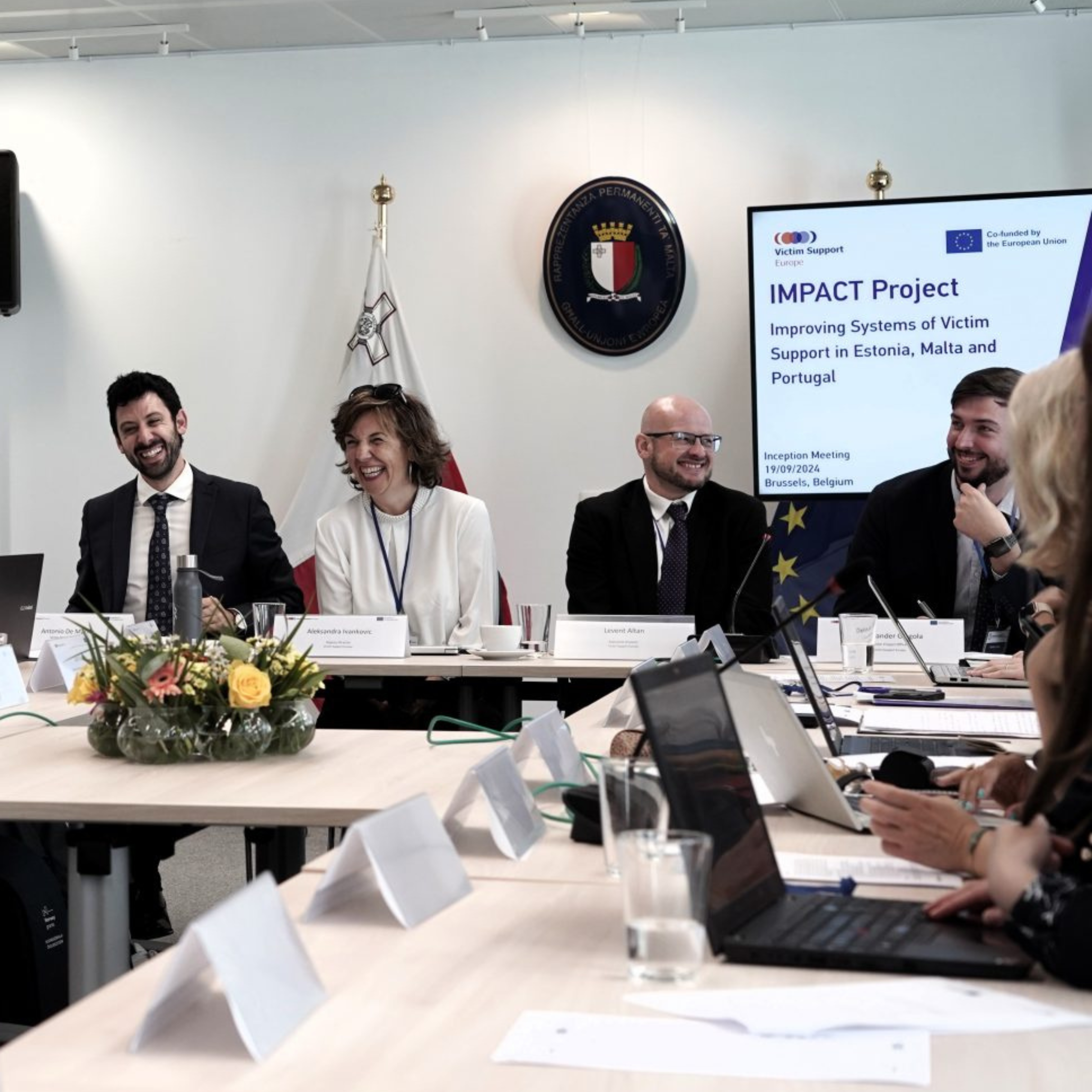
The project for the protection of victims of crime (IMPACT) was launched in cooperation between the Ministry of Justice and Digital Affairs, the Ministry of Social Affairs, Victim Support Europe, and the European Union, and will run for two years (2024–2026).
Victim support offers free and confidential counselling to everyone who has experienced crime or violence. Help is available around the clock via the victim support crisis helpline 116 006, and victim support workers operate in every county.
For more information:
Kaire Tamm, kaire.tamm@sotsiaalkindlustusamet.ee
Gerttu Aavik, g.aavik@victimsupporteurope.eu
