

Victim Support Europe’s Deputy Director, Aleksandra Ivanković, paid an official visit to Montenegro to support national efforts to strengthen victims’ rights and victim support systems as part of the joint European Union and Council of Europe programme Horizontal Facility for the Western Balkans and Türkiye, within the action “Strengthening Accountability of the Judicial System and Enhancing Protection of Victims’ Rights in Montenegro.”
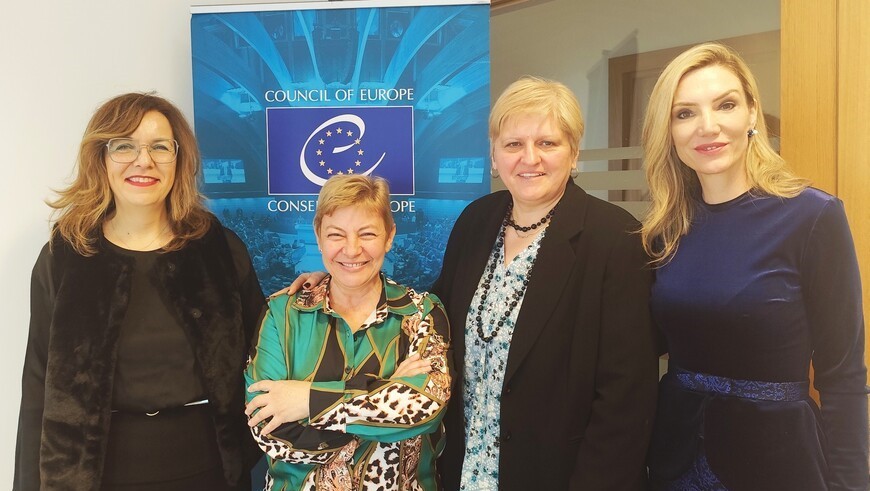
The visit took place in the context of Montenegro’s recently adopted Strategy for the Protection of Victims’ Rights and the accompanying Action Plan, which establish a comprehensive framework for protecting the rights of all victims of criminal offences. One of the Strategy’s operational objectives focuses on the establishment and improvement of specialised support services for victims, ensuring accessible, coordinated, and trauma-informed assistance.
During her visit, Ms Ivanković, had a series of high-level meetings with representatives of key national institutions, including governmental authorities responsible for justice, social affairs, health and education, members of the judiciary, social welfare institutions, independent bodies, and civil society organisations. Discussions focused on the current state of victims’ rights in Montenegro, the availability of victim support services, and existing legal and institutional mechanisms.
The meetings also addressed the steps needed to establish a comprehensive, accessible, and sustainable national victim support system, in line with European standards, including the EU Victims’ Rights Directive, the Istanbul Convention, and relevant European Court of Human Rights jurisprudence. The aim was, in particular, to support the setting-up of a sui generis system of generic victim support services – those that will be responsible of supporting all victims of all crimes – as is the requirement of the EU Victims’ Rights Directive. In this context, Aleksandra discussed with the Montenegrin counterparts the issues of inter-institutional coordination, availability of generic and specialised support services, and ensuring that victims receive timely, trauma-informed, and rights-based assistance both within and outside criminal proceedings.
The visit formed part of an expert mission conducted from 19–23 January, aimed at collecting relevant information, mapping existing capacities, and preparing concrete recommendations to strengthen the Montenegrin victim support system. This work will contribute directly to the effective implementation of the Strategy and Action Plan, ensuring that future improvements are tailored to the Montenegrin context and the real needs of victims.
Victim Support Europe together with Council of Europe remains committed to supporting Montenegrin authorities and partners in strengthening victim-centred justice and ensuring that victims’ rights are effectively implemented in practice.
