
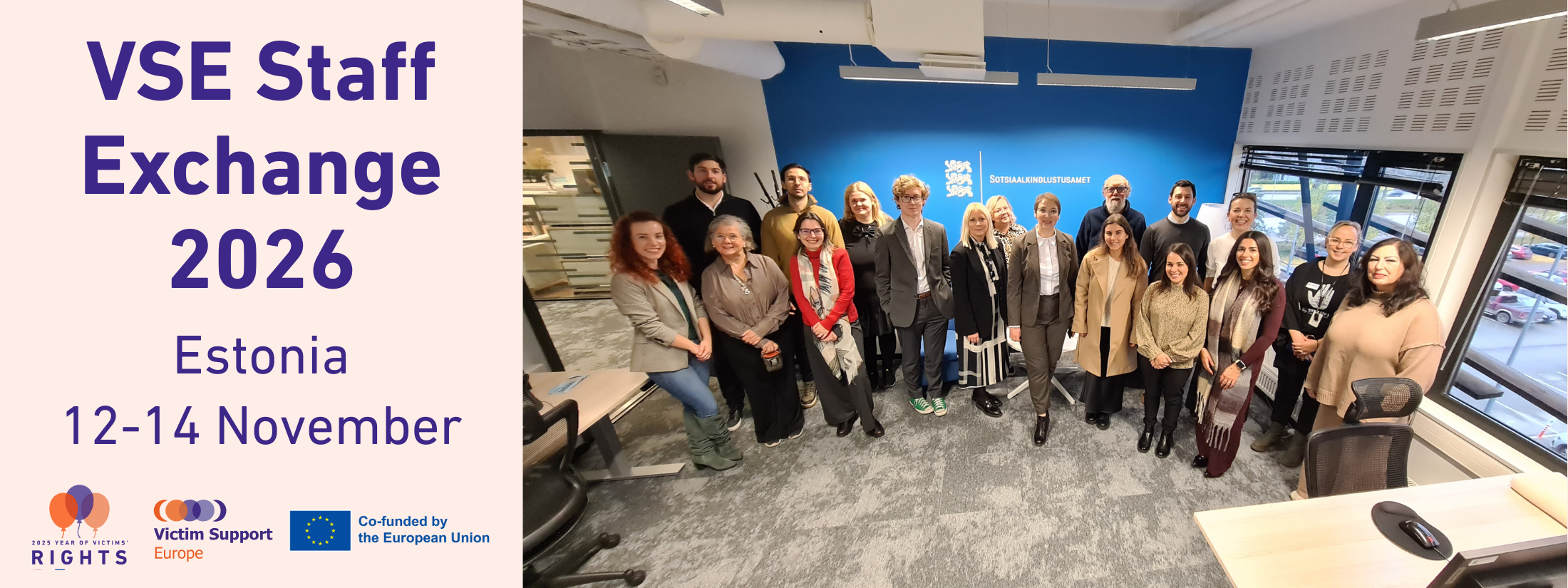
From 12 to 14 November 2025, Victim Support Europe (VSE) held a three-day study visit to Estonia, hosted by the Estonian Social Insurance Board (SIB). The visit brought together representatives from VSE member organisations to learn about Estonia’s highly coordinated and victim-centred support system.
The programme offered an important opportunity for frontline practitioners and experts to exchange good practices, deepen peer learning and strengthen partnerships across Europe. Through meetings with national authorities, visits to frontline support teams and exchanges with specialised services, participants gained a comprehensive understanding of how Estonia’s legislation, governance structure and operational model work together to ensure accessible and trauma-informed support for victims of crime.
Estonia Study Visit Programme
Day 1 – Understanding Estonia’s victim support framework
The visit opened at the headquarters of the Social Insurance Board, Estonia’s national authority responsible for organising and delivering victim support services. Participants received an in-depth overview of how the system evolved from civil-society initiatives in the 1990s into a fully state-run, nationwide support structure underpinned by the Victim Support Act (last updated in 2023).
Key features presented included Estonia’s strong emphasis on psychological support, strengthened information-sharing systems, increasing rates of self-referrals and the use of trained volunteers to support victims. The discussions highlighted the importance of coordinated national standards, 24/7 crisis response and strong cooperation between state institutions and NGOs.
In the afternoon, participants visited the Victim Support Northern Team within the Police and Border Guard Board. With SIB social workers based inside police stations, close cooperation ensures early intervention, rapid referrals and a victim-centric approach during police procedures. The team also shared their practices on risk assessment, juvenile cases and continuous professional development.
The day concluded with a visit to Tallinn’s Barnahus. Estonia’s child-friendly, multidisciplinary model supports children who have experienced or are suspected of having experienced sexual abuse, display harmful sexual behaviour or trafficking. Participants learned about the service’s evidence-based assessment tools, its strong multi-agency governance and its rapid growth in referrals. The visit illustrated how Estonia’s Barnahus model balances investigative needs with trauma-informed care and child participation.
Day 2 – Frontline practices in Tartu
 The second day began with a visit to the Tartu Women’s Support Centre, an NGO providing essential support to women and children affected by domestic abuse. Staff explained their crisis counselling methods, legal advocacy work, shelter services and empowerment programmes. Participants also learned about challenges faced by specialist NGOs, including resource limitations, gaps in legal provisions, enforcement difficulties and the complex reality of court proceedings for victims.
Later in the day, the group visited the Sexual Violence Crisis Centre located in a hospital setting. The centre’s medical teams presented their structured crisis response protocol, emphasising forensic documentation, free medical treatment and cooperation with law enforcement. Discussions also covered the rising numbers of reported cases, the need for improved staffing and the challenges linked to confidentiality, reporting obligations and inter-agency coordination.
The day concluded with a meeting at the State Prosecutor’s Office. The prosecutor outlined procedural challenges in cases involving minors, the importance of individual needs assessments and complexities linked to Barnahus interviews. Participants reflected on the delicate balance between evidentiary requirements and protecting victims from secondary victimisation.
Day 3 – National policy perspectives 
On the final day, participants met with representatives from the Ministry of Justice, the Ministry of Social Affairs and the Ministry of Digital Affairs. The discussion offered a strategic overview of Estonia’s national policy direction in violence prevention, victim support and youth justice.
Officials presented the Violence Prevention Agreement 2021–2025, highlighting the need for prioritisation and sustainable financing. They also reviewed the Victim Support Act (2023) and the Domestic Violence Prevention Action Plan 2024–2027, emphasising early support, mandatory information exchange and strengthening intervention models for victims and perpetrators.
The next session focused on youth justice reform. Estonia’s approach aims to reduce reoffending and support reintegration through restorative justice, community-based interventions and strengthened professional capacity. Officials stressed the need for long-term sustainability, stronger inter-agency cooperation and national alignment with EU-level initiatives.
Conclusion
The Estonia study visit provided VSE members with a clear and in-depth understanding of how a small country has built a comprehensive, efficient and cooperative national victim support system. Estonia demonstrated an integrated approach rooted in strong legislation and multi-agency coordination. The exchange offered valuable insights and practical lessons for victim support organisations across Europe, strengthening collaboration and fostering shared learning within the VSE network.
Feedback
The feedback we received from participants was overall very positive. The experience was considered by many a great opportunity to learn new practices, connect with like-minded individuals, and reveal insights into what can be done to improve support for victims. Please find below the feedback quotes from some participant.
Victim Support Agency – Malta
“The Staff Exchange Program in Estonia was an enriching experience that gave me a deeper understanding of how victim support services are structured and delivered there. Observing their practices and engaging with local professionals provided practical insights that we can adapt to improve our own work. The sessions on digital tools for victim assistance and the visit to their victim support facilities were particularly valuable, offering concrete examples of innovation and efficiency. This program not only broadened my knowledge but also strengthened my network of colleagues across Europe. I truly hope VSE continues to offer such opportunities, as they are essential for sharing best practices and fostering collaboration among victim support professionals at the EU level.”
APAV – Portugal
“Participating in the Staff Exchange in Estonia was an incredibly enriching experience for me as a professional. Having the opportunity to meet victim support professionals from various countries, exchange experiences and share knowledge was truly unique. I returned to Portugal completely inspired and motivated to implement some of the ideas and good practices I had the opportunity to learn about. It was undoubtedly a transformative experience that strengthened my commitment to providing more human, effective and integrated support.”
Victim Support UK – United Kingdom
Please see an inspirational digital review by participant Daniel Priestley:
