

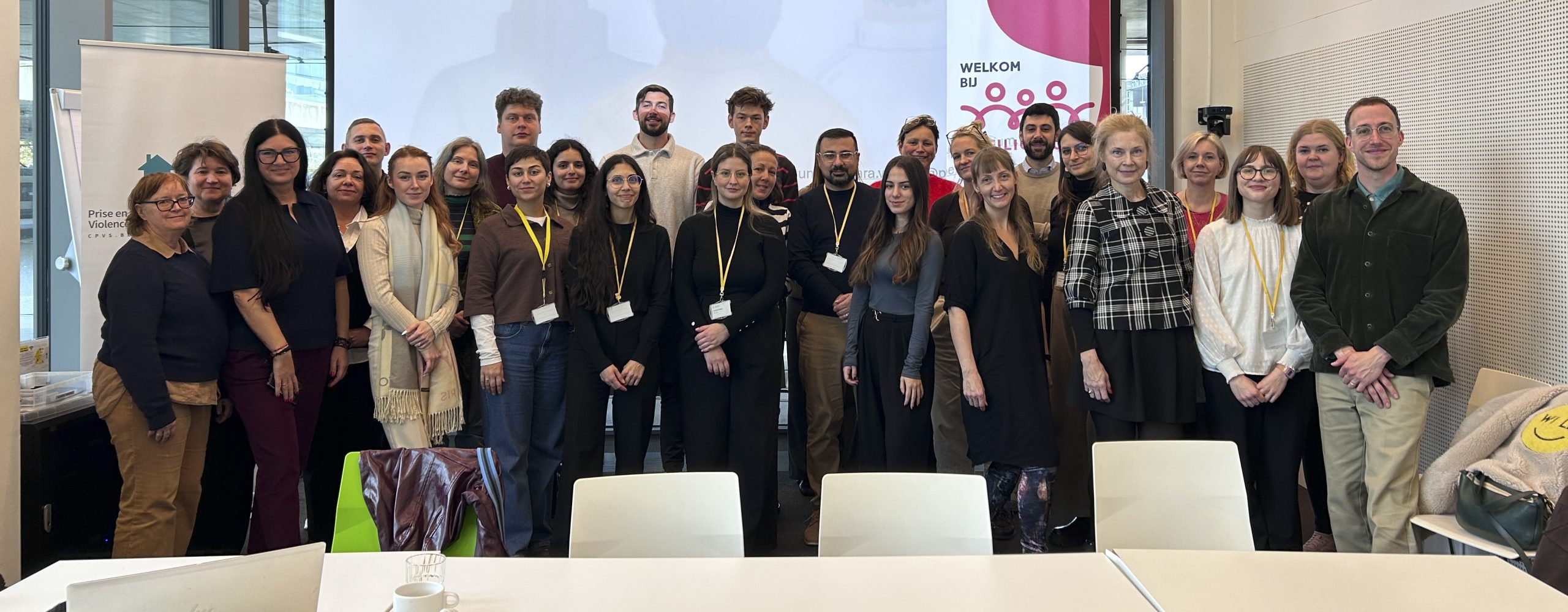
Successful Brussels Study Visit Brings BRIDGE & IMPACT Together
Between 17 and 19 November, a joint study visit of projects BRIDGE and IMPACT took place in Belgium. Participants from 5 countries – Latvia, Lithuania, Estonia, Malta and Portugal, as well as VSE staff, attended field visits and meetings with experts offering them an insightful overview of the victim support services available in Belgium.
Day 1
On Day 1 (17 November), the group was joined at the VSE office by representatives of the European Commission. Paola Gaffurini, representing SG REFORM – the body funding both IMPACT and BRIDGE through its Technical Support Instrument, opened the meeting and invited project leaders to showcase the work carried thus far and share the key outcomes of both actions. This served as an exchange of best practices and lessons learned throughout the projects’ implementation.
Next, María Concepción Sabadell Carnicero (DG JUST) provided a comprehensive presentation of the 2026 Revised Victims’ Rights Directive. Taking into account the international nature of the group, the discussion focused on practical recommendations for the transposition of the Directive. This intervention was complemented by a presentation from VSE’s Policy team who offered an outlook on VSE’s implementation agenda and objectives. Some of the key priorities set by VSE for the current implementation period include 1) comprehensive national victim support systems and making sure that systems work for all victims of all crimes, 2) ensuring equal access to victims’ rights and support for all victims, 3) future-proofing the strategy – ensuring a system that is able to provide support but is also flexible and resilient enough to answer to new and emerging forms of crimes and victims’ needs.
Day 2
On Day 2 (18 November), the group travelled to Ghent for a full day of meetings with various stakeholders operating in Flanders. First, CAW East Flanders introduced participants to its work. While being a general social welfare organisation, CAW also provides services addressing the needs of victims of crimes, with the focus of building their resilience, integrating them in the community, and coping with trauma and stress. CAW also helps victims with practical and legal matters and refer them to specialists in healthcare or to dedicated peer support groups.
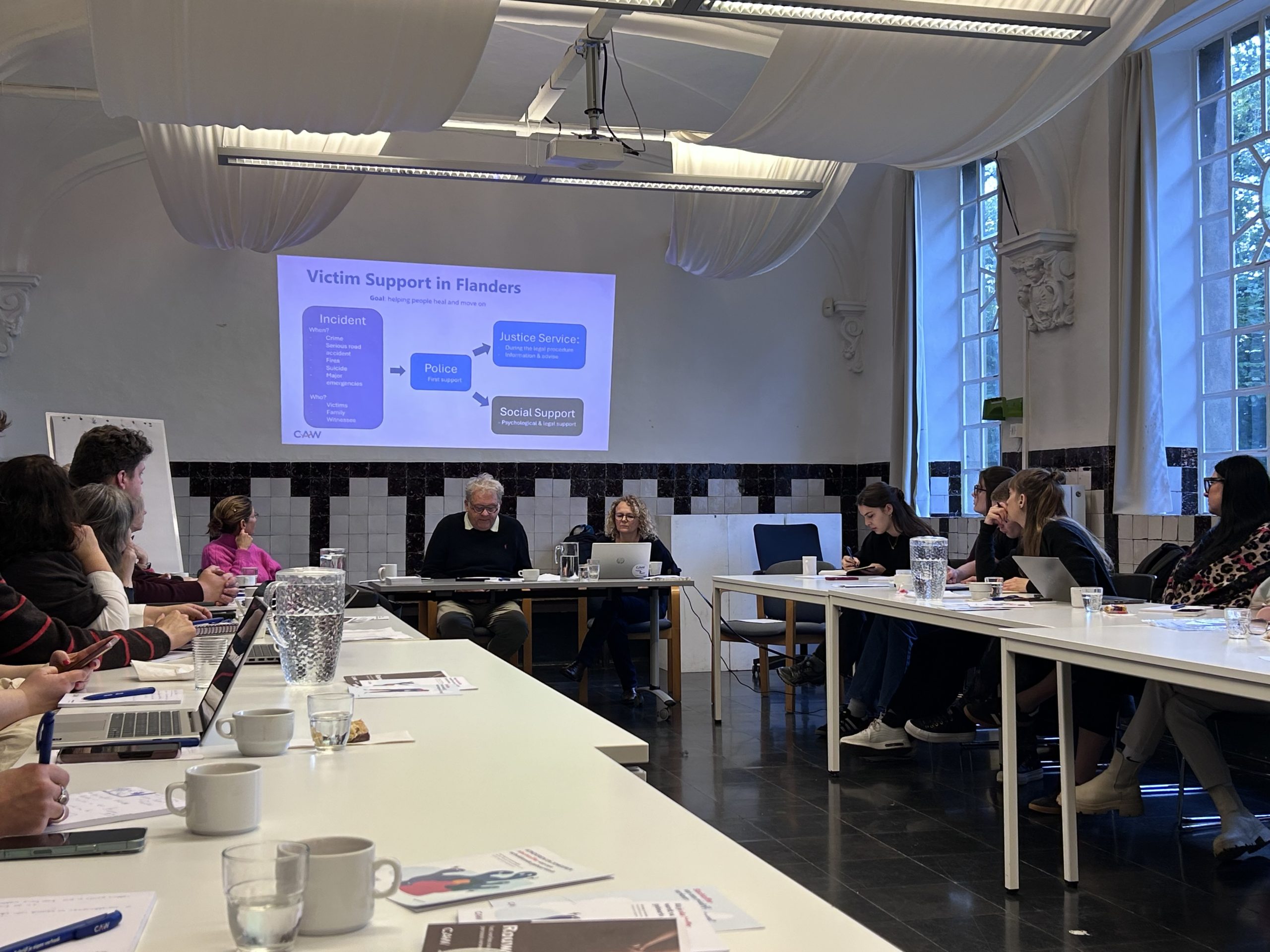
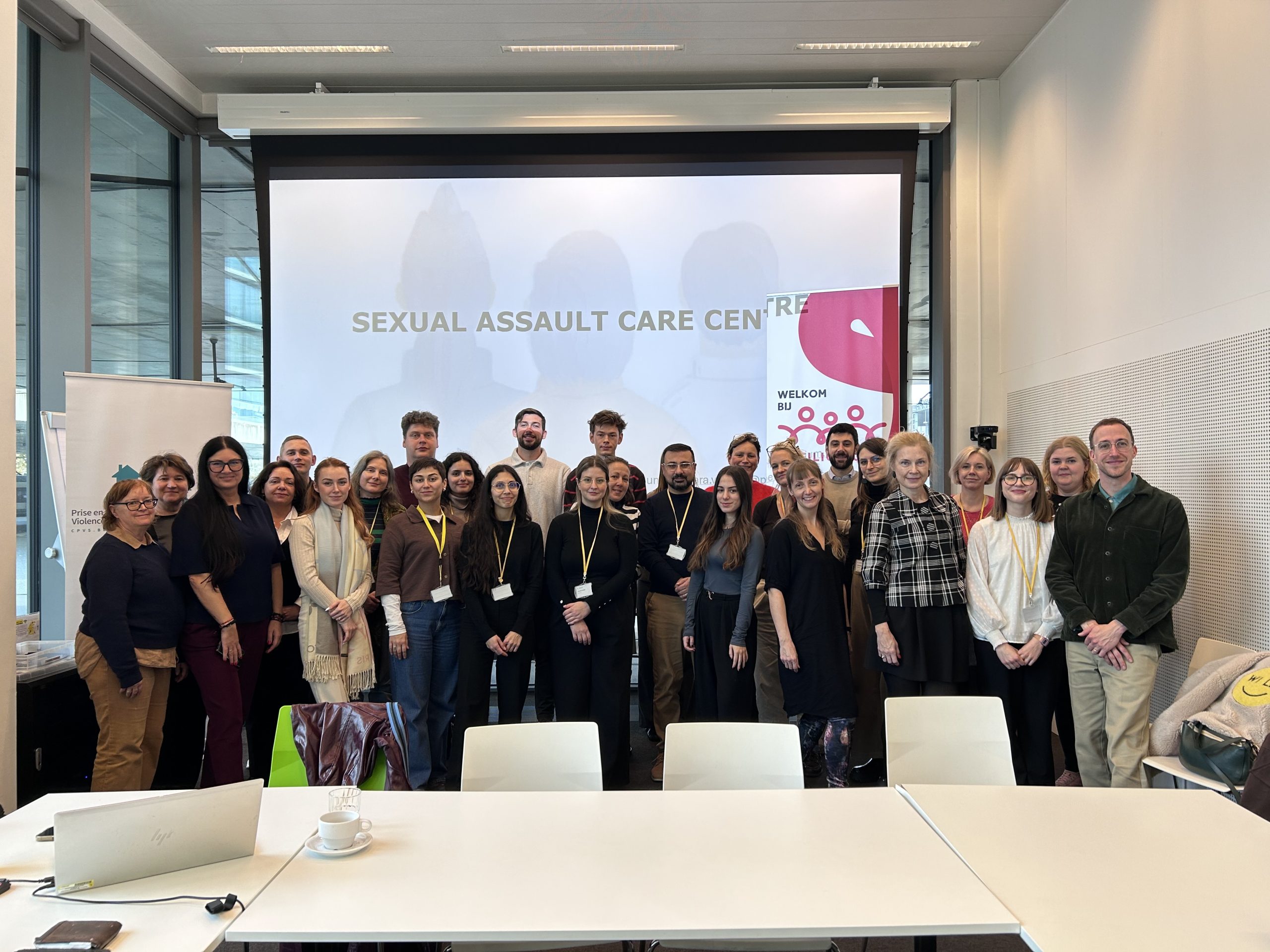
Next, colleagues from the Ghent Sexual Assault Centre provided an overview of their specialised services targeting victims of sexual violence. The centres offer comprehensive care to victims, including:
– Medical care: examination of wounds and injuries, treatment of immediate and/or long-term sexual and/or reproductive effects of sexual violence,
– Forensic examination: recording injuries, as well as traces left by the offender, and collecting evidence of sexual violence, regardless of whether the victim reports the crime to police.
– Filling a report with the police: only with victim’s consent and with the assistance of specialised police officers present at the centre.
– Psychological care: provision of advice and information.
– Aftercare: monitoring of medical and psychological needs, which may include referral to specialised services.
The centres are operated by a multidisciplinary team, including: 1) nurses, who perform the medical examinations and collection of forensic evidence, as well as act as case managers who welcome patients, liaise with police and prosecution, and follow up with the victim, 2) specialised and designated police officers, who take the reporting of the crime; and 3) clinical psychologists available on appointment.
The final presentation of Day 2 was delivered by Joachim Boderé (Director, Family Justice Centre East Flanders). The objective of the centres is bringing together professionals from various fields who consult on the best approach for addressing cases of domestic violence. The starting point for the centre’s involvement is a concern raised and referred by a welfare organisation or by the police. The Family Justice Centre supports families by clarifying the available support options, ensuring a connection between the family and relevant services, and following up on the individual cases for as long as necessary. The ultimate goal is to restore stability in the family’s life, with a particular focus on the safety and well-being of children. It was also emphasised that stability may mean many different things depending on the family’s situation and does not directly translate to keeping the partners/parents together.
The visit to Ghent offered practical insights into the working of key victim support organisations operating in Flanders. Together, they offer a wide range of services, answering victims’ needs and ensuring that no victim is left without relevant assistance.
Day 3
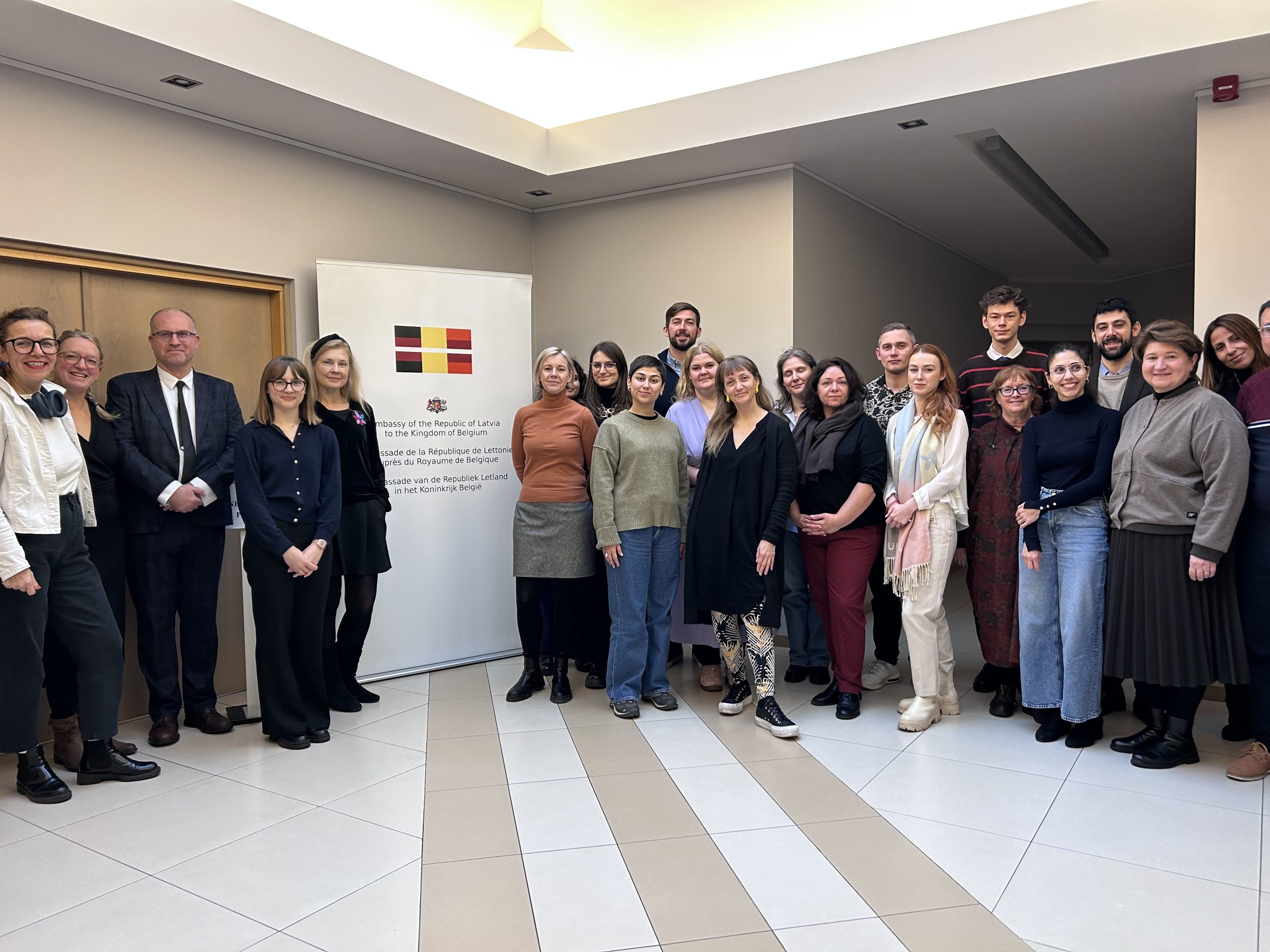
During Day 3 (19 November), the final day of the study visit, participants were kindly hosted at the Permanent Representation of Latvia to the EU during the first half of the day. The day began with a presentation from Olivier Lauwers (Chief-secretary of the Terrorism Division, Commission for financial aid for victims of intentional acts of violence). Olivier explained the history behind the setting up of the Commission, and specifically, the Terrorism Division, as well as the legal framework and its mandate. He highlighted that, while financial assistance can be of significant help in victims’ recovery process, it is equally important to deliver it in a victim-centric way, recognising that a victim is not a concept but an individual with real needs. Participants used the presentation as an opportunity to compare the Belgian compensation system with those operating in their own countries.
Next, An Verelst (Psychosocial Manager, Head of Expertise, Coordination and Resilience, DG Preparedness & Response at the Federal Public Service: Public Health) delivered a presentation explaining how crisis management and support of victims during and in the immediate aftermath of collective emergencies are organised in Belgium. This included The Belgian system for responding to mass victimisation and the role of public health in the medical and psychosocial management of these incidents. An also presented BITS – the Belgian Incident Tracking System used to collect data on everyone involved in emergency situations, allowing to better organise assistance and inform relatives more quickly.
The final presentation of the study visit took place at the VSE’s office and was provided by Ben Van Winckel (Police Victim Support Service National Coordinator, Belgian Federal Police). Ben started by presenting the historical timeline of development of the Police Victim Assistance Unit – a unique unit within law enforcement, responsible for communication with and support of victims. The work of the Victim Support Unit is grounded in the European rights of victims and follows a needs-based approach, focusing on the consequences of crimes and the needs of victims. The unit is responsible for structural work – policy support, networking, and training, but also for specialised assistance 24/7 to victims, relatives, and witnesses. It provides assistance where needed – on the crime scene, at police stations, hospital,s or during home visits. The support varies from case to case and is dependent on the victim’s needs. This may include support during questioning, reporting of bad news, return of personal belongings, assistance in commemorations, and information provision about psychosocial consequences of trauma, or legal and administrative procedures.
Some participants also had the chance to attend the Tech4Victims event taking place right after the study visit (20 November). They used the opportunity to explore innovative technological solutions which have the potential to facilitate and strengthen various aspects of victim support.
The study visit provided participants with an opportunity to explore the Belgian victim support system, learn about some of its best practices, and consider how these could be transferred onto their own national contexts. Victim Support Europe and the Project Team thank all speakers for their time and dedication to participate in this collaborative knowledge exchange opportunity.
