

Wolfgang Gappmayer, Ing. Dr., LL.M., is an Austrian lawyer based in Vienna whose professional work includes victims’ rights and criminal procedure, alongside his practice in customs and foreign-trade law. His engagement with victims’ rights began during his studies and was also shaped by a personal experience of victimisation. He has since written and lectured on victims’ rights and legal assistance in criminal proceedings and followed the development of Austria’s victim-support system for many years.
In this conversation, Gappmayer reflects on how Austria has developed its approach to victims’ rights—from legal recognition and procedural protections to practical access to support. He discusses the role of legal and psychosocial victim support, coordination between institutions, secondary victimisation, participation in criminal proceedings, the needs of vulnerable groups, compensation and redress, and lessons Austria can draw from other European systems. At the heart of the discussion is a central question: how can rights on paper become meaningful support for victims in practice?
From Victim to Rights-Bearer: The Development of Austria’s Approach
Marina Kazakova, VSE: Wolfgang, where are you sitting today while we are speaking? And if we travelled back to the beginning of your work on victims’ rights, what would that professional world have looked like?
Wolfgang Gappmayer: Today, I look at a legal landscape in Austrian criminal law that has implemented victims’ rights very well. I’ve been engaged with victims’ rights since my time as a student. At the start of my professional career, about 20 years ago, victims’ rights were already anchored in positive law in a similar way.
What was missing back then, however, was understanding. Key decisionmakers viewed these rights with suspicion. There was concern that proceedings would become emotionalised. There was also concern that victims might be (undesirably) coached on their testimony through lawyers and psychosocial support. Beyond that, little attention was paid at the time to victims’ emotional and psychosocial needs. The victim’s role was often reduced to that of evidence — a witness. In my view, a great deal has changed since then.
Marina Kazakova, VSE: You describe a significant shift: from seeing victims primarily as sources of evidence to recognising them as people with their own needs and rights. Your own engagement with this issue also has a personal dimension. What brought you into this field? Was there a particular moment when you realised that criminal justice systems needed to give victims a stronger voice?
Wolfgang Gappmayer: What brought me to victims’ rights was a biographical experience — an experience of being a victim myself. About 30 years ago, my father was killed in a mass shooting. Since then, victims’ rights and the support of crime victims have occupied me.
Marina Kazakova, VSE: That personal experience also raises a broader question about the limits of legal protection. What can the law actually provide to someone who has experienced a crime — and what can it not provide?
Wolfgang Gappmayer: What can’t legal texts alone convey? That’s a good question. Formulated rights are worthless if I have no access to them. A person only has access if they have knowledge. But knowledge alone isn’t enough either — one has to understand how to put that knowledge into practice. One also has to understand what the enacted law (“gesetztes Recht”) actually expresses. What exactly am I entitled to? Who is responsible? Who decides? How do I deal with a negative decision?
This is where it helps that Austria has both legal and psychosocial victim support (“Prozessbegleitung”). Legal support applies the law, and psychosocial support translates that applied law into the victim’s own language — ideally.
But law alone isn’t everything. For me, it’s essential that victims find their way back into life after a victimising experience. That only succeeds if the experience is recognised as part of one’s own biography. Law can contribute to that — but law alone isn’t enough.

Photo courtesy of: Wolfgang Gappmayer
Building a Victim-Centred System
Marina Kazakova, VSE: You have emphasised that rights need to be understandable and accessible, not simply written into legislation. Austria does not have a single national victims’ rights strategy; instead, its system has developed through legislation, institutions and support structures. How would you explain the Austrian approach to someone unfamiliar with it?
Wolfgang Gappmayer: It’s true, a single national victims’ rights strategy is missing. There is a wide range of different victim support institutions. That can create confusion at times, and it isn’t always easy to identify who is responsible for what.
At the same time, this means that a victim with particular needs can be cared for by whichever institution has the most relevant experience. In my view, coordination between institutions and organisations works well — not least thanks to the Management Center for Victim Support, which ensures central communication and the best possible networking between private-sector providers and individuals working in the field of victim support.
There are currently plans to close this Management Center. I consider that a mistake: I expect this to bring real challenges for victim work in Austria, and to this day I don’t understand the reasoning behind it.
Marina Kazakova, VSE: So the diversity of organisations can be both a strength and a source of complexity. Against that background, the legal framework remains an important foundation.
Austria is often recognised for having strong legal protections for victims within criminal proceedings. What are the most important milestones in the development of victims’ rights in Austrian law?
Wolfgang Gappmayer: There has been a very long and extensive development here, so it’s difficult to point to a single legal reform that made the biggest difference.
Personally, I find it incredibly important that it was recognised that victims are not merely witnesses to proceedings, but people with particular needs and rights who must be protected. After all, the legal order had already failed once — at the moment these people became victims. Society owes them particular attention after the offence.
Another important step was surely the creation of various procedural rights. These, too, ultimately aim at protecting and sparing victims. A further important step was taken when the victim’s legal position was decoupled from financial loss.
The legal and psychosocial victim support is also, to my mind, extremely important. Providing simultaneous legal and psychosocial care ensures that victims’ needs are safeguarded. Entitlement to it applies in particular to victims of violence or dangerous threats, victims of violations of sexual integrity, relatives of those killed, minors who witnessed violence, and victims of stalking, terrorism and certain online offences.
That’s a wide circle — but not a universal one. Someone who is purely a victim of a property crime with no element of violence is often left to enforce their claims alone, as I described under question 14.
Marina Kazakova, VSE: This distinction between having a right and being able to exercise it runs through much of our discussion. You have also stressed the importance of knowledge and understanding. A legal right only matters if a victim can understand it and use it. How does Austria ensure that victims can realistically exercise their rights?
Wolfgang Gappmayer: That’s what I meant earlier by “access to rights.” In Austria, everyone working in criminal prosecution is obliged to inform and advise victims. This mostly does happen — though often, unfortunately, only formulaically, directly after the offence.
We all know that at that point a victim is often not in a position to understand complicated explanations. In the nervousness and agitation of the moment, victims frequently don’t even grasp a simple explanation — even when it’s phrased in plain language.
I think victims’ rights in Austria are strong. But that only matters if victims learn about them and know how to use them — often they don’t. Then even the best laws achieve nothing. Ideally, victims receive legal and psychosocial support throughout the process.
Plain-language explanations for victims do exist — I was actually part of the working group that developed them at the time. They’re also available at police stations. But as I said: just because rights are written down somewhere, or briefly mentioned, doesn’t mean they’re actually exercised and made use of.
Coordinating Support and Preventing Secondary Victimisation
Marina Kazakova, VSE: Information is therefore one part of access, but support structures determine whether victims can actually navigate the system. WEISSER RING has been part of that support landscape for decades. What is the unique contribution of a victim support organisation like WEISSER RING within the Austrian system?
Wolfgang Gappmayer: That’s right. Weisser Ring has contributed to milestones in victims’ rights for a very long time. Weisser Ring acts without bureaucracy on behalf of victims, is available with expert information both for those affected and for authorities and legislative bodies, and stands for neutrality.
Whereas 40 years ago a small circle of volunteers worked for Weisser Ring, it is now a legally recognised, nationwide general victim support organisation covering all of Austria.
Marina Kazakova, VSE: WEISSER RING is one part of a much broader network. Victims may interact with police, prosecutors, courts, victim support organisations, healthcare providers and social services.
From your perspective, does Austria have a coherent victim support ecosystem, or do victims still have to navigate different institutions separately?
Wolfgang Gappmayer: That naturally depends heavily on how severely a victim is affected by the offence. It can become a problem when victims are unaware of their rights — that can lead to disadvantages that can no longer be undone later.
A victim helpline (0800 112 112) at least ensures precisely targeted coordination of help and information.
In my view, then, there is an institutionally quite good network. From a victim’s perspective, however, this network probably can’t always be experienced as a coherent system.
Marina Kazakova, VSE: That distinction is important: a network can function institutionally while still feeling fragmented from the victim’s perspective. How well do legal institutions and victim support organisations work together in practice?
Wolfgang Gappmayer: Of course, not everyone is aligned around the same victim-centred approach. Victim support organisations naturally pursue a far more victim-centred approach than police, prosecutors or courts do. In my view, that’s actually as it should be: from a legal and rule-of-law perspective, it would strike me as odd if police, prosecutors and courts worked just as victim-centred as victim support organisations do.
Exchange between them does happen. There are meetings and round tables. But of course, a great deal depends on the individuals actually involved.
Marina Kazakova, VSE: You have identified coordination as important, but also suggested that the experience of the individual victim depends greatly on how the system works in practice. Austria has developed one particular mechanism that attempts to bridge legal and personal support: psychosocial and legal assistance during criminal proceedings. How would you explain this model to someone outside Austria?
Wolfgang Gappmayer: I consider it the centrepiece. Legal and psychosocial victim support together ensure that victims are cared for ideally — legally and, at the same time, psychologically and socially.
This starts with counselling before and during proceedings (and even shortly afterwards), and continues even during hearings. While legal support workers attend the (entire) hearing and ensure that victims’ rights are upheld, psychosocial support workers are always with the victim. In doing so, they strengthen them and stand by them in exceptional situations.
For me, it is precisely this combination of legal and psychosocial support that makes the Austrian model so valuable.
Marina Kazakova, VSE: That combination is particularly relevant when the justice process itself can become a source of further stress. One of the biggest challenges internationally is ensuring that victims are not harmed again by the justice system. How does Austria address the risk of secondary victimisation?
Wolfgang Gappmayer: Austria has measures in place to avoid secondary victimisation. Being questioned by a person of the same sex, separate questioning, cross-examination conducted in a way that spares the victim further questioning (“kontradiktorische Vernehmung”), and witness protection rooms are just a few examples. Of course, every proceeding still involves stress.
Training takes place through seminars. In addition, trainee judges (future judges and prosecutors) are required — even if only briefly — to work at victim support organisations (Section 9 RStDG).
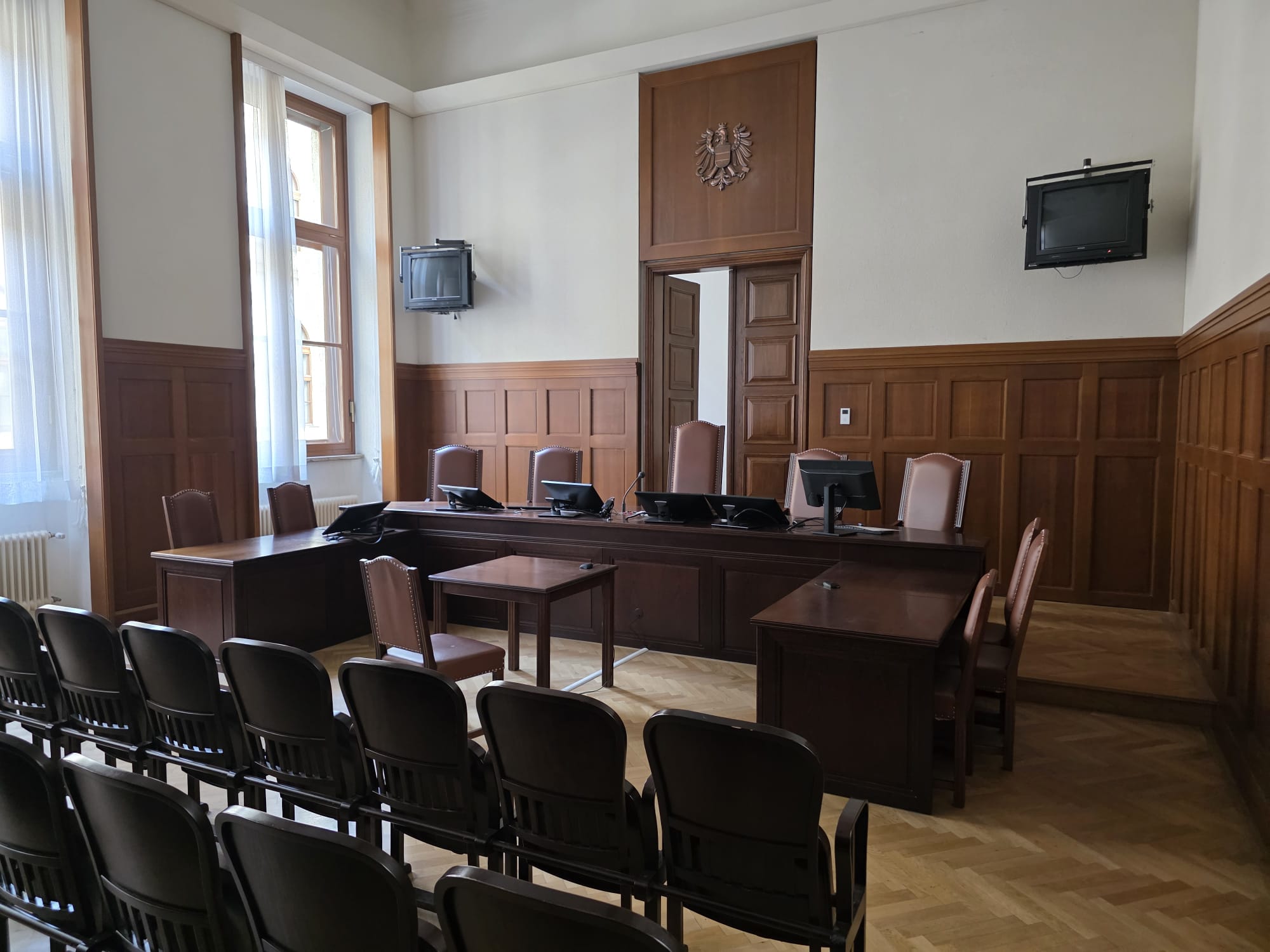
Photo courtesy of: Wolfgang Gappmayer
Participation, Vulnerability and Access to Redress
Marina Kazakova, VSE: Protection from further harm is closely connected to the question of participation. Victims need not only to be protected during proceedings, but also to have a meaningful role within them. Austria provides victims with rights to participate in criminal proceedings. How effective are these participation rights in practice?
Wolfgang Gappmayer: In my view, the participation rights work well. Recognition of the offence and recognition as a victim naturally contribute to victims regaining trust in the justice system.
It would be good to also give victims the ability to lodge an appeal — currently this is only possible to a very limited extent.
Marina Kazakova, VSE: You have now returned several times to the question of access — whether through information, representation or the ability to challenge a decision. A victim support system is only effective if victims can reach it. How accessible are victim support services across Austria?
Wolfgang Gappmayer: I already touched on this under “access to rights.” Victim support organisations do operate nationwide, but caring for people in more remote areas is naturally more difficult — scheduling appointments and finding meeting locations is somewhat harder.
All in all, though, the support is good.
That’s broadly true for people with disabilities as well. Language barriers are an issue. Digitalisation — including the infrastructure in meeting rooms — has brought relief here.
Marina Kazakova, VSE: Accessibility also means recognising that not all victims have the same needs. Some groups require specific forms of protection or specialist support. How does Austria adapt its approach for children, victims of domestic violence, victims of sexual violence, elderly victims, victims with disabilities, and victims of serious organised crime?
Wolfgang Gappmayer: As I mentioned earlier, Austria — for historical reasons as well — has a very diverse range of victim support organisations. For each specific group, the situation looks like this:
For children, special protective rights apply under the Code of Criminal Procedure: cross-examination conducted by specially trained personnel, child-friendly interview rooms, which have existed in all courts since 1997, and the mandatory appointment of a curator when a parent is themselves a suspect or there is a conflict of interest.
For victims of domestic violence and victims of sexual violence, there are dedicated, specialised institutions funded by the Ministry of the Interior and the Ministry for Women.
For elderly victims and for victims of organised crime, by contrast, I don’t see comparably dedicated, specialised structures. As a rule, the general system of victim support and legal proceedings, together with the 48 general and specialist victim support organisations, applies, without there being an institution tailored specifically to these groups.
With elderly victims, there’s a further problem: today, a great deal of information is offered (primarily) in digital form. There is still information and advisory material available on paper, but a growing share of information is only available digitally. For people who aren’t familiar with these channels, that creates an additional access barrier.
Marina Kazakova, VSE: Access is also crucial when victims seek redress. The consequences of crime can extend well beyond the criminal proceedings themselves, including financial harm. How does Austria support victims in accessing compensation and other remedies?
Wolfgang Gappmayer: In Austria, there is private-party participation (private-law claims can also be pursued within criminal proceedings) and claims under the Crime Victims Act (“Verbrechensopfergesetz”).
In principle, this works well. The problem is that claims made through private-party participation must not only be quantified specifically but also, as far as possible, substantiated with evidence. For unrepresented victims, it’s often extremely difficult to work out how much their claim is actually worth. Enforceability is also often lacking.
Victims should be informed about claims under the Crime Victims Act — but in practice this often happens only inadequately.
So the legal avenues for compensation exist, but access to them is not equally effective for all victims.
European Lessons and the Future of Victims’ Rights
Marina Kazakova, VSE: We have discussed the strengths and limitations of the Austrian system from the perspective of access, support and participation. Austria has also played an important role in the European development of victims’ rights. How closely does Austria align with the principles of the EU Victims’ Rights Directive?
Wolfgang Gappmayer: In my view, the EU Victims’ Rights Directive is well implemented. Rights go beyond it, too — I’m thinking here of the legal and psychosocial victim support.
What I think is missing is the possibility of an appeal, which currently exists only to a very limited extent.
Marina Kazakova, VSE: European standards provide one framework, but victims’ experiences also shape the development of national systems. As legal experts and representatives of a victim support organisation, how do you see the role of victims’ experiences in shaping Austrian policy?
Wolfgang Gappmayer: As I mentioned at the outset, Weisser Ring is also available to politics and legislators with advice and practical support. That applies both as a source of ideas and as a provider of expertise. All of this includes position papers and policy demands.
Marina Kazakova, VSE: If victims’ experiences and expert recommendations help shape policy, the next question is what happens when rights are nevertheless not respected. Austria has strong legal protections, but implementation remains a challenge in every country. How does Austria ensure accountability when victims’ rights are not respected?
Wolfgang Gappmayer: It would be desirable to have the possibility of lodging an appeal. That possibility does exist to some extent (e.g. an application to continue proceedings, and appeal in some cases), but it remains only limited.
Marina Kazakova, VSE: Looking at Austria’s victims’ rights model today, you have identified legal and psychosocial support as a central strength, while repeatedly returning to the problem of access. What would you identify as the greatest strengths of the system, and where do you see the biggest challenges for the future?
Wolfgang Gappmayer: For me, Austria’s greatest strength is clear: legal and psychosocial victim support. The best rights only benefit actual victims once they have access to them (and support ensures that access).
The challenge, certainly, is making sure that truly all victims learn about their rights and are able to exercise them. Support is only available to victims who fall within the legally defined entitlement group. Purely property-crime victims, for example, are often excluded.
Police advisories are often too complicated, and above all, delivered at a moment when someone already has too much on their mind. At that point, an advisory often doesn’t register yet.
Marina Kazakova, VSE: You have also looked beyond Austria through comparative European work. In several of the examples you mention, the key difference is not necessarily the existence of rights, but how proactively the system reaches victims.
When comparing Austria with countries such as the Netherlands, Belgium, Ireland, Portugal or Germany, where does Austria stand out?
Wolfgang Gappmayer: I have actually done that, having worked on a number of ENVR reference books. There was a fair amount of comparative-law work involved there, and a few points in particular stood out to me.
Hungary, for example, has an opt-out system: the investigating authority is required to automatically forward a victim’s contact details to the competent victim support organisation, unless the victim explicitly objects. The organisation then has to reach out within two working days. Slovakia and Croatia likewise rely on proactive contact rather than waiting for the victim to come forward.
I think it would be desirable if this kind of direct, proactive contact were expanded further in Austria too. That’s my central point of criticism: the best rights are worthless if victims don’t know they exist.
I was also struck by the Portuguese model of “Multidisciplinary Intervention Spaces,” where police officers and social workers work together in the same place around the clock, specifically for victims of domestic violence. I think Austria has some catching up to do here.
Spain goes even further with its “Comprehensive Forensic Assessment Units”. Teams of psychologists, forensic doctors and social workers who, on behalf of the judiciary, build a comprehensive picture not just of the injuries but of the entire living environment of the victim, the alleged perpetrator and the family.
And finally: Spain uses technical protective tools, such as electronic monitoring of restraining orders in cases of gender-based violence, and the ATENPRO project — a mobile device that lets victims reach an emergency response centre immediately at any time. That’s an area where I think Austria could still catch up.
Marina Kazakova, VSE: These examples bring us back to the central theme of our conversation: rights matter, but victims need to be able to find and use them. If we look ahead rather than comparing systems today, what would meaningful progress look like from the victim’s perspective?
If we return five years from now and look at victims’ rights in Austria, what is the one change you would hope victims themselves say they have experienced? Not lawyers. Not institutions. Not policymakers. Victims. What would you want them to say?
Wolfgang Gappmayer: I would want them to say: “I felt well informed. I was taken seriously. I was able to participate. I no longer had to be afraid. And I received redress for the harm done to me. But above all: I did not have to go looking for help. The help found me.”
