

Belgium’s approach to victims’ rights is built around a clear ambition: making sure victims do not have to navigate a complex system on their own. This interview explores how that ambition translates into practice, from cooperation between police, justice, psychosocial services and victim-support organisations to questions of accessibility, participation and recovery. In conversation with Céline Bisschop, Director of CAW Centraal-West-Vlaanderen, the discussion examines both the strengths and challenges of Belgium’s multi-level approach. It asks what it takes to make a fragmented system feel coherent from a victim’s perspective—and how policy can move beyond formal rights to deliver meaningful support in people’s everyday lives.
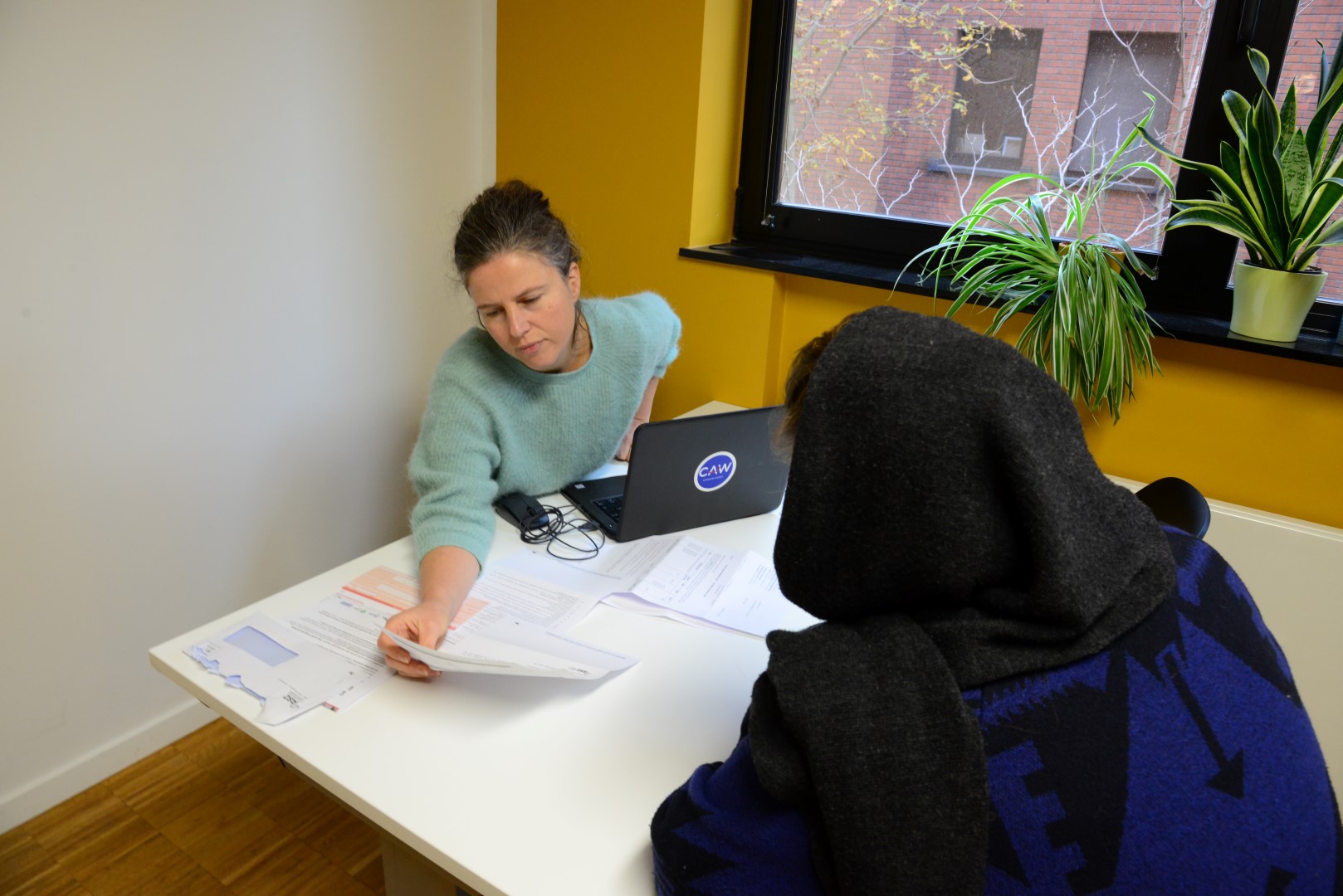
Photo courtesy of: Atilla Erdem for CAW
Setting the scene
Marina Kazakova (VSE): Céline, where are you sitting today while we are speaking? And if we travelled back to the beginning of your journey in victim support, what would your professional world have looked like then?
Céline Bisschop: Today I’m speaking to you in my role as Director of Practice and Policy Development at CAW Centraal-West-Vlaanderen. Alongside that role, I also serve as the Flemish sector liaison for offender and victim support. Together with colleagues from across Flanders, I help develop our shared vision, methodologies and quality frameworks for victim support. That includes everything from shaping policy and practice standards to strengthening cooperation between organisations and ensuring that victims receive high-quality, accessible support, wherever they live.
My own journey, however, didn’t begin around a policy table. It started in frontline practice, working as a family support worker in youth care. I worked alongside families facing a wide range of challenges, and although every family had its own story, I quickly realised how often experiences such as violence, abuse, loss or other traumatic events lay beneath the surface. Victimisation rarely affects just one individual. It shapes relationships, parenting, mental wellbeing and people’s ability to trust themselves and those around them. That broad, contextual perspective is something I’ve carried with me throughout my career.
Over time, I became increasingly interested not only in supporting individual clients, but also in improving the way support itself is organised. Working directly with people gives you a very clear picture of where they struggle. Sometimes those difficulties are personal, but just as often they are linked to fragmented systems, procedures or the way organisations work together. Rather than feeling frustrated by those barriers, I wanted to become part of the conversation about how we could improve them. That gradually led me from frontline practice into policy development.
Today, I don’t see those two worlds as separate. Good policy can only exist when it is continuously informed by practice. My experience as a frontline worker still shapes the questions I ask whenever we develop new methodologies or policy frameworks: “What will this actually mean for the person who needs our support?”
For me, moving into policy has never meant moving away from clients. It has simply become another way of making a difference for future clients. I believe that victims should never depend on chance: on meeting the right professional, living in the right region, or somehow finding the right service by themselves. By developing shared quality frameworks, strengthening cooperation and building a more coherent support system, we try to ensure that high-quality victim support becomes less dependent on coincidence and more consistently available to everyone. That has become the guiding principle throughout my work.
Your journey into victim support
Marina Kazakova (VSE): How did your own professional journey lead you to this field? Was there a moment when you realised that supporting victims required not only helping individuals, but also improving the wider system around them?
Céline Bisschop: Looking back, I don’t think there was one single defining moment. It was something that gradually became clear through working with people every day.
As a family support worker, I often met people whose lives had been turned upside down by violence, abuse or other traumatic events. What struck me was that the traumatic event itself was rarely the only challenge they faced. People were also trying to navigate police procedures, legal questions, financial concerns, parenting responsibilities, housing issues or mental health difficulties, often all at the same time.
Working in family support also taught me that people never experience trauma in isolation. Every traumatic event takes place within a broader context: families, relationships, work, housing, finances, social networks… Those parts of someone’s life don’t simply pause after a traumatic event. In many ways, they become even more important. That is why I’ve always looked at victim support through a broader wellbeing perspective, rather than only through the event itself.
That taught me an important lesson very early in my career: good victim support is never just about providing emotional support. It is about understanding the person’s whole context and helping them regain stability across different areas of life.
At the same time, I also realised that even the most committed professional cannot overcome structural barriers alone. Victims should not have to find their own way through a complex landscape of organisations and procedures while recovering from a traumatic event. The system itself has a responsibility to work around the victim, rather than expecting the victim to navigate the system.
That realisation gradually shifted my own focus. I became increasingly interested in improving not only individual support, but also the way organisations collaborate, how methodologies are developed and how we can build more coherent support pathways. Because when you improve the system, you create better conditions for every future victim and every professional working alongside them.
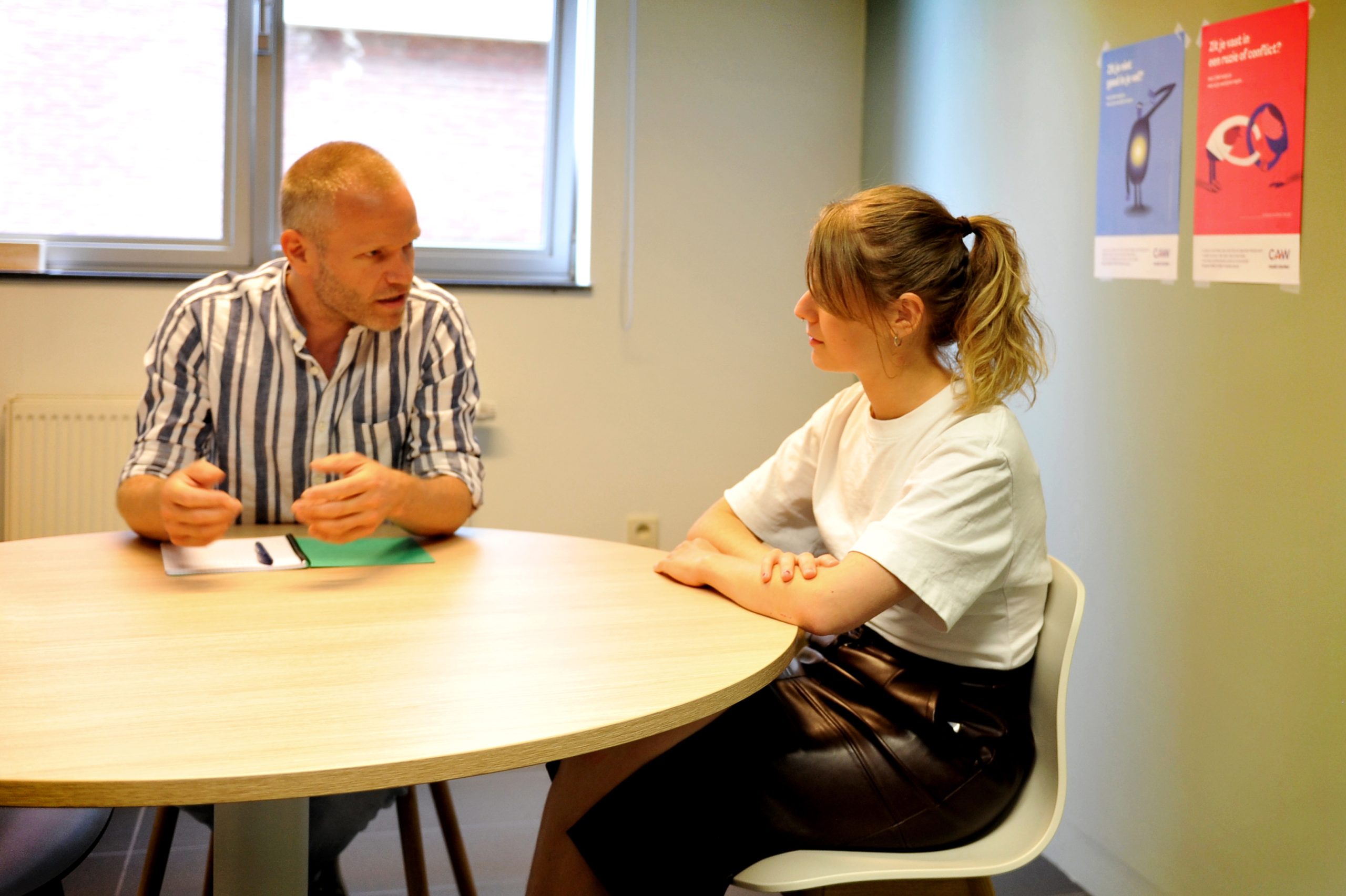
Photo courtesy of: Maaike Buys for CAW
Understanding Belgium’s model: a multi-level policy framework
Marina Kazakova (VSE): From your perspective, how would you explain the Belgian model to someone unfamiliar with it? What are the strengths of this multi-level approach; does it allow services to respond better to local realities, or does it create challenges in ensuring equal access for all victims?
Céline Bisschop: If I had to explain the Belgian model to someone unfamiliar with it, I wouldn’t start with our institutional structure. I would start with the idea behind it. In Belgium, we recognise that supporting victims is a shared responsibility. No single organisation can meet all the needs that arise after a traumatic event. Recovery is broader than criminal justice alone, and our support system reflects that.
Different organisations each contribute their own expertise. The police provide the first response and victim care at the moment of the incident. The justice system safeguards victims’ legal rights and supports them throughout judicial proceedings. Mental health services provide specialised psychological care when needed. As CAW, we bring a wellbeing perspective: we focus on psychosocial recovery, helping people regain stability, rebuild their sense of safety and navigate the practical and emotional consequences of what has happened. Access to justice is an important right for victims, but for many people it is only one part of a much broader recovery process.
I believe that is one of the strengths of the Belgian model. Different organisations don’t compete with each other; they complement one another. Each partner has a distinct role, and together we aim to provide victims with coordinated support rather than isolated interventions.
Of course, our multi-level structure also creates challenges. Victims don’t think in terms of federal, regional or local responsibilities. They simply want to know where they can turn, who will help them and whether they will receive the support they need. The complexity of our system means that cooperation and coordination cannot be taken for granted; they have to be actively built and maintained.
That is exactly why, within the CAW sector, we have invested so much in developing shared methodologies and quality frameworks, such as the OSCAR methodology and our common framework for victim support. The objective is not to make every organisation work in exactly the same way, but to ensure that every victim can expect the same quality of support, regardless of where they enter the system, while still allowing enough flexibility to respond to local needs and realities.
For me, the discussion is not really about centralisation versus decentralisation. It is about coherence. People don’t need one organisation to do everything; they need organisations to work together so well that the system feels like one. When that happens, victims don’t experience separate organisations, they experience one connected support journey.
One of the unique aspects of our system is that people do not have to be involved in criminal proceedings to receive support. Someone can access psychosocial support simply because they have experienced a traumatic event and need help moving forward. That reflects our belief that support should be based on people’s needs, not on the legal status of their case.
It also means that a victim’s path to help isn’t a single, simple route, and that clear communication about where to go is essential at every stage.
A concrete example of how this works in practice is the coordination of aftercare after a crisis, disaster or terror attack. In the very first crisis phase, the initial psychosocial response is coordinated federally, by the psychosocial managers of the Federal Public Service for Public Health. But the coordination of aftercare – making sure victims know where to turn with their questions once that acute phase is over- sits at community level: there’s a dedicated coordinator for Flanders, a colleague covering Wallonia, and cooperation with the Justice House in Eupen for the German-speaking community.
That layered structure lets each level do what it’s best placed for: fast, unified coordination federally in the acute phase, and community-level coordination for the sometimes years-long aftercare process that follows.
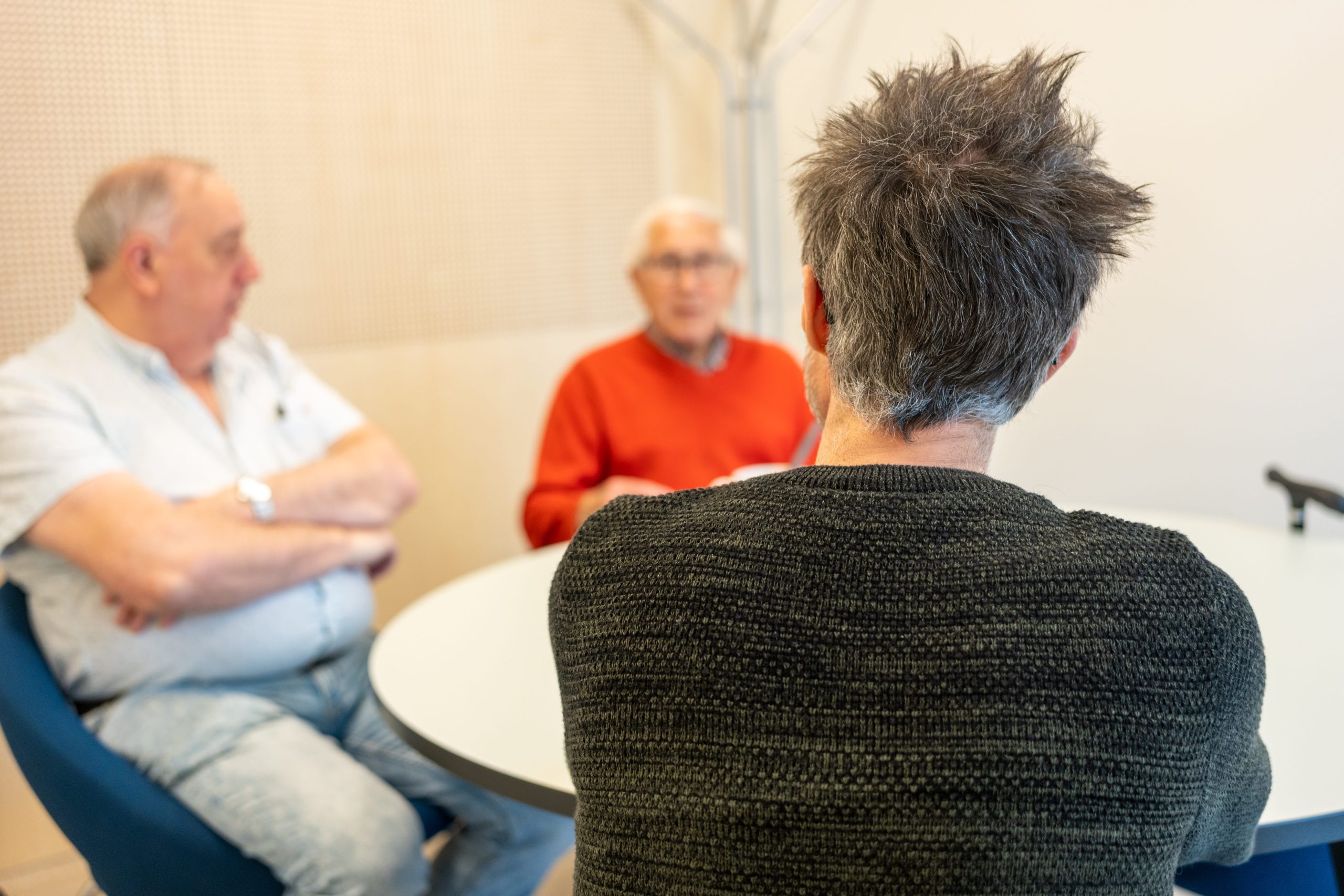
Photo courtesy of: Lies Debouver
From policy frameworks to victims’ daily reality
Marina Kazakova (VSE): Looking from the perspective of CAW and frontline services, what changes have made the biggest difference in victims’ lives?
Céline Bisschop: One strong example is that CAW’s Victim Support works in close collaboration with the police and the courts, which makes it much easier for people who need help to actually reach us. In practice, that means many victims are referred to us early on, right after a traumatic event.
We’re also rolling out OSCAR, a trauma support methodology, across Flanders and Brussels. Wherever a victim comes to CAW’s door, they can expect the same kind of support: the same principles for how people register, how first contact is made, and how we follow up. That consistency, rather than the quality of support depending on which office or region a victim happens to end up in, is one of the concrete improvements we’re proud of.
After a larger crisis or disaster specifically, victims are also actively registered with CAW Victim Support in their own region, so that CAW can reach out and start a support process itself, rather than leaving it to the victim to find and contact the right service on their own.
From a victim’s perspective, the journey doesn’t start with the system. It starts with a person whose sense of safety, control and trust has suddenly been disrupted. Our role is to help rebuild that, step by step.
The first priority is always safety and immediate support. Depending on the situation, this may involve the police, emergency services or specialised organisations. But once the immediate crisis has passed, people’s needs often change. They need someone who helps them understand what they are experiencing, explains that many of their reactions are normal responses to an abnormal event, and helps them regain a sense of direction during a very uncertain period.
One of the first conversations is rarely about services. It is about understanding where someone is today, what matters most to them and what would help them take the next step. Everything else follows from there.
At CAW, we view recovery through a broad wellbeing perspective. A traumatic event rarely affects just one aspect of a person’s life. Alongside the emotional impact, people may face practical concerns about their children, work, housing, finances or relationships. Some have questions about police procedures, compensation or their legal rights, while others simply need someone who listens without judgement. Recovery looks different for every individual, which is why support should always be tailored to the person’s needs rather than follow a predefined pathway.
One of the strengths of the Belgian model is that people do not need to be involved in criminal proceedings to access psychosocial support. Whether or not someone decides to report the incident, they can still receive support to help them regain stability and move forward. Access to justice remains an important right, but recovery is broader than the legal process alone. For many victims, justice is an important part of recovery, but it is rarely the whole story.
As a wellbeing organisation, CAW’s primary role is to support that broader recovery process. We focus on psychosocial support, helping people regain stability, rebuild their sense of safety and reconnect with everyday life. When specialised legal, psychological or medical expertise is needed, we work closely with our partners within the wider Belgian victim support system. Each organisation contributes its own expertise, allowing victims to receive the right support at the right moment.
Ultimately, our ambition is not simply to help people cope with what has happened. It is to help them regain control over their own lives. When victims no longer experience separate organisations but instead feel supported by one connected network working around them, then I believe our system is doing what it is meant to do.
Defining success for victims
Marina Kazakova (VSE): Céline, what would a successful victim support system look like from the perspective of the person seeking help? What would a victim notice?
Céline Bisschop: For me, success means a victim feels they’re allowed to respond to what happened to them in their own way, and in their own time. We start from the idea that victims are responding in a very human, understandable way to something abnormal, there’s no single ‘correct’ way to recover or grieve. If someone contacts CAW’s Victim Support, we provide help for as long as they need it, not for a fixed number of sessions.
A victim would notice that nobody is putting a timeframe on their process, that they’re believed, and that they don’t have to justify why they still need support, even long after the event.
One of the biggest misconceptions about recovery is that it means returning to the person you were before the traumatic event. In reality, life often changes after trauma. Recovery is not about erasing what happened; it is about helping people move forward with what has happened.
For me, recovery begins when people gradually regain a sense of safety, control and hope. It is when they start making their own choices again, reconnect with the people and activities that matter to them, and begin to see a future beyond the traumatic event. Recovery looks different for everyone and unfolds at a different pace for every individual.
That is why we don’t measure success by whether someone’s problems have disappeared or whether a case has been closed. Sometimes the most meaningful signs of recovery are surprisingly small: someone sleeping through the night again, returning to work, taking their children to school, walking outside without overwhelming fear or simply feeling able to make decisions about their own life again. Those moments often tell us much more than any formal outcome measure.
From my current role, I also see recovery from another perspective. When we develop better methodologies, strengthen cooperation between organisations or create clearer support pathways, we are also contributing to recovery—indirectly, but on a much larger scale. Better systems enable better conversations, better support and ultimately better outcomes for victims.
Ultimately, I think our work has made a difference when people no longer experience themselves only as victims of what happened, but as individuals who have regained ownership of their own lives. We cannot change what happened to someone. But we can help create the conditions in which recovery becomes possible.
Photo courtesy of: CAW
Who coordinates Belgian victim policy?
Marina Kazakova (VSE): From your experience, who brings everyone together? If the Belgian victim support system were a household, who makes sure everyone knows their responsibility, and who checks whether something has been forgotten?
Céline Bisschop: If I may slightly adapt the metaphor, I don’t really think of the Belgian victim support system as one household with one person in charge. I think of it as a network. A strong network doesn’t depend on one organisation coordinating everything; it depends on every partner understanding its own responsibility, recognising the expertise of others and working towards a shared goal.
In Belgium, responsibilities are clearly distributed. The police are often the first point of contact and provide immediate victim care. The Justice Houses support victims throughout judicial proceedings, while organisations like CAW focus on psychosocial recovery and practical support. Mental health services contribute specialised psychological care whenever that is needed. Each organisation has its own expertise, and that complementarity is one of the strengths of our system.
Coordination also depends on the phase someone is going through. During a disaster or terrorist attack, for example, the acute psychosocial response is coordinated at the federal level. Once that emergency phase has passed, dedicated aftercare coordinators take over, working together with CAW, the Justice Houses and Mental Health Centres to ensure that people continue to receive the support they need over the months and sometimes years that follow. The creation of this coordination role after the 2016 Brussels attacks was an important lesson in strengthening continuity of care.
For individual victims, coordination often looks different. There is rarely one formal case manager overseeing everything. Instead, coordination grows out of collaboration, regular communication and a shared understanding of each organisation’s role. In that sense, coordination doesn’t mean one organisation being in charge, it means every organisation understanding both its own responsibility and the added value of everyone else’s.
That collaboration doesn’t happen automatically. It requires continuous investment in relationships, shared methodologies and clear agreements. Within the CAW sector, we have invested heavily in common quality frameworks, shared approaches and structured cooperation with police, justice and other partners. Much of that work remains invisible to victims—and that’s exactly how it should be. When cooperation is working well, people don’t notice the separate organisations behind it at all, they simply feel supported.
In the end, I think that is the real coordinator of the Belgian model: not one institution, but a shared commitment to putting the victim at the centre and working together around that person.
Multi-agency cooperation: one system or many organisations?
Marina Kazakova (VSE): Are these actors working together as one victim support ecosystem, or do victims still experience the system as a series of separate doors they have to open one by one?
Céline Bisschop: I think the answer is both. From an organisational perspective, Belgium has many different actors, each with their own legal mandate, expertise and responsibilities. But from a victim’s perspective, those organisational boundaries should become almost invisible. People should experience one coherent support journey, not a series of separate doors they have to open one by one.
That is exactly what our cooperation aims to achieve. Every organisation contributes something different. The police provide the first response and initial victim care. The Justice Houses guide victims through the judicial process. Mental health services offer specialised psychological care. CAW focuses on psychosocial recovery, practical guidance and helping people regain stability in everyday life. None of these organisations can replace the others, but together they create a much stronger support system than any one organisation could provide on its own.
One of the strengths of the new Belgian Cooperation Agreement on Victim Support between the Federal State and the Flemish Community is that it no longer focuses only on dividing responsibilities. It also establishes common working principles for everyone involved: starting from the victim’s perspective, responding to individual needs, ensuring continuity of care through warm referrals, and investing in proactive and outreach-oriented support. In other words, it creates a shared vision of how victims should experience support, regardless of which organisation they first encounter.
It is important to add that, at present, there is no single cooperation agreement at the level of Belgium bringing together Flanders, the French Community, the German-speaking Community and Brussels as parties to one national framework. Instead, there are several cooperation agreements that reflect the way responsibilities for victim support are divided between the different levels of government. Alongside the Flemish-Federal agreement, there is also a cooperation agreement between the Federal State, the French Community and the Walloon Region regarding victim support. For the Brussels-Capital Region, there is a separate and institutionally broader agreement between the Federal State, the Flemish Community, the French Community, the French Community Commission (COCOF) and the Common Community Commission (GGC), concerning victim support in the bilingual Brussels-Capital area.
That doesn’t mean our work is finished. We still know that some people remain under the radar. Victims who never report to the police, people who don’t immediately identify themselves as victims, or those whose needs only become visible months later may not automatically find their way to support. Reaching those people earlier remains one of our biggest challenges.
We also continue to invest in making collaboration more seamless. The Cooperation Agreement provides a strong foundation, but good cooperation is built every day through local networks, warm referrals, shared methodologies and mutual trust between professionals. Those relationships cannot simply be written into legislation; they require continuous dialogue and joint learning.
Ultimately, I think the measure of success is quite simple. A victim should never have to understand how our system is organised. If they only experience professionals who communicate with one another, know each other’s roles and stay connected around their needs, then the system is doing what it is meant to do.
My own experience has taught me that sustainable collaboration doesn’t start with formal agreements. It starts with professionals understanding each other’s roles, speaking a shared methodological language and trusting one another. Frameworks create the conditions, but relationships make collaboration work.
The challenge of fragmentation
Marina Kazakova (VSE): Does Belgium’s multi-level structure ever make it difficult to guarantee the same level of victim support everywhere? Would stronger national coordination improve victim support?
Céline Bisschop: I don’t believe the main challenge is that Belgium has different regions or different levels of government. Diversity in itself isn’t the problem. The real challenge is ensuring that every victim experiences the same quality of support, regardless of where they enter the system.
Local realities will always differ. Every region has its own partnerships, population and specific needs. That flexibility is actually one of the strengths of our system because it allows organisations to respond to local circumstances. At the same time, flexibility should never come at the expense of consistency. Victims should not receive different quality of support simply because they happen to live in another region or contact another office.
That is exactly why, within the CAW sector, we are implementing OSCAR, our shared methodology for trauma-informed victim support across Flanders and Brussels. OSCAR provides common principles for registration, first contact, needs assessment and follow-up, while still leaving room for professional judgement and local adaptation. The objective is not to standardise people; it is to standardise quality. Wherever someone walks through the door of a CAW, they should recognise the same values, the same professional approach and the same commitment to recovery.
The new Cooperation Agreement on Victim Support reinforces exactly that ambition. It commits all partners to work from the victim’s perspective, respond to individual needs, ensure continuity through warm referrals and develop a shared methodological framework. In my view, those shared principles are more important than creating additional layers of central governance.
So, would stronger national coordination improve victim support? I think the answer depends on what we mean by coordination. If coordination means more dialogue, stronger partnerships, shared quality standards and common methodologies, then absolutely. But if it simply means more centralisation, I’m not convinced that would automatically improve victims’ experiences.
For me, the goal isn’t uniformity for its own sake, it’s making sure every victim can rely on the same quality of care, while allowing professionals enough flexibility to respond to the unique circumstances of each individual. That balance between consistency and local responsiveness is, I believe, one of the greatest strengths we should continue to build on.
The role of victim support organisations
Marina Kazakova (VSE): What is the unique contribution of frontline victim support organisations within Belgium’s system? How important is independence and trust between victims and support providers?
Céline Bisschop: I think the unique contribution of frontline victim support organisations is that we create a space where people don’t first have to be victims in a legal sense—they can simply be people who have experienced something overwhelming. Our starting point is never the criminal case; it is the human impact of what has happened.
People often think the first question after a traumatic event is whether someone wants to report what happened. In reality, the first question is much more fundamental: “How are you today, and what do you need to take the next step?” Everything else grows from there.
That is where CAW has a unique role within the Belgian system. As an independent wellbeing organisation, we offer a safe and confidential space where people can talk freely about what happened, without feeling that every conversation is linked to legal decisions or criminal proceedings. Victims don’t need to have reported the incident, nor do they need to know whether they ever will. Support is based on need, not on the legal status of a case.
Our role is much broader than emotional support alone. We help people understand the impact of trauma, provide practical and administrative guidance, explain their rights, support them in navigating insurance or compensation procedures, and connect them with other specialised services whenever needed. Throughout that process, our focus remains the same: helping people regain stability, confidence and control over their own lives.
Independence plays a crucial role in building trust. Trust cannot be demanded; it has to be earned. Many victims carry feelings of shame, guilt or uncertainty. Some are unsure whether what happened is ‘serious enough’. Others are afraid they won’t be believed, or simply aren’t ready to involve the police or justice system. Knowing that they can first talk to someone whose only concern is their wellbeing often lowers that threshold considerably.
At the same time, independence does not mean working in isolation. On the contrary. We are part of a broader network of police, justice, mental health and specialised services. Our independence allows us to remain fully focused on the person’s needs, while our partnerships ensure that people receive the right support whenever additional expertise is required. I believe those two elements—independence and strong collaboration—are not opposites. They are exactly what makes the Belgian system work.
What I’ve noticed is that victims remember organisations less than they remember how they were treated. If someone leaves our service feeling heard, respected and no longer alone in what they are going through, then we have fulfilled our role.
Turning policies and action plans into practice
Marina Kazakova (VSE): From your perspective, how do we ensure that policies and plans become real improvements in victims’ everyday experiences?
Céline Bisschop: For me, policies don’t change lives. People do. Policies only become meaningful when they help professionals provide better support to the people sitting in front of them.
Over the years, I’ve learned that writing a policy or launching an action plan is only the beginning. The real question is what changes on Monday morning when a professional sits down with a victim. Does that conversation become more trauma-informed? Does the person feel more heard? Does the professional know better how to assess individual needs, make a warm referral or work together with other organisations? If the answer is no, then even the best policy has not yet achieved its purpose.
That is why implementation matters just as much as policy development. A shared vision needs to be translated into practical methodologies, continuous training, coaching and opportunities for professionals to learn from one another. The new Belgian Cooperation Agreement on Victim Support recognises this very clearly by investing not only in collaboration, but also in specialised training, shared methodological frameworks and an individual needs-based approach across all partners.
Within the CAW sector, OSCAR is a good example of that philosophy. It is not simply another methodology; it is a way of translating shared principles into everyday practice. It helps professionals work from the same trauma-informed values while still leaving room for professional judgement and the uniqueness of every person’s story.
The same applies to national action plans on gender-based violence or other forms of victimisation. Their success should not be measured by the number of actions they contain, but by whether victims actually notice the difference. Do they receive support more quickly? Do they have to repeat their story fewer times? Are professionals better equipped to recognise trauma? Do organisations collaborate more effectively? Those are the outcomes that really matter.
At its core, I believe good policy becomes almost invisible. Victims should not notice the policy itself; they should notice that they are treated with empathy, that professionals communicate with one another, that support feels coordinated and that they never have to fight the system while recovering from trauma. When that happens, policy has achieved its purpose.
The real success of a policy is not that professionals know it exists. It is that victims experience its impact without ever needing to know its name.
Alignment with European victims’ rights standards
Marina Kazakova (VSE): How do you assess Belgium’s alignment with European victims’ rights principles — information rights, participation, protection, individual needs assessment, access to support? Are there areas where Belgium is particularly strong?
Céline Bisschop: One of the great strengths of the European Victims’ Rights Directive is that it shifted the conversation away from seeing victims primarily as participants in criminal proceedings and towards recognising them as people with individual rights, needs and recovery processes. I believe that broader perspective has had a very positive influence across Europe, including in Belgium.
When I look at the Belgian system today, I see many of those European principles reflected in practice. We recognise that victims need clear information, but also that information only becomes meaningful when it is provided at the right moment, in a way that people can actually understand during an emotionally overwhelming period. We invest in individual needs assessments rather than assuming that every victim needs the same support. And we increasingly work from the idea that support should be organised around the person, not around institutions or procedures.
Within the CAW sector, this philosophy is reflected in the development of OSCAR, our shared trauma-informed methodology. It helps professionals assess individual needs, identify risks, provide tailored information and make warm referrals when additional expertise is needed. In many ways, it translates the values of the Victims’ Rights Directive into everyday professional practice.
I also think Belgium has a particular strength in recognising psychosocial support as an essential pillar of victim support. Access to justice is fundamental, but recovery is broader than legal proceedings alone. The fact that victims can receive psychosocial support regardless of whether they report the crime reflects an important understanding that recovery should be based on people’s needs, not on the legal status of their case.
At the same time, I don’t think alignment is ever something you simply achieve once and then consider finished. It requires continuous reflection. We still need to become better at reaching people who never identify themselves as victims, those who never come into contact with police or justice, and people whose support needs only emerge much later. We also need to continue investing in consistent quality across services and in proactive outreach, because rights only become meaningful when people can actually access them.
Ultimately, I don’t think the success of the Victims’ Rights Directive should be measured by legal compliance alone. It should be measured by whether victims genuinely experience those rights in practice: whether they feel heard, informed, protected and supported throughout their recovery. That, for me, is the real benchmark.
Preventing secondary victimisation
Marina Kazakova (VSE): How does Belgium work to prevent secondary victimisation? Where do you still see risks of secondary victimisation?
Céline Bisschop: When people hear the term “secondary victimisation”, they often think first about institutions such as the police, healthcare or the justice system. Those are certainly important, and Belgium has made significant progress in reducing those risks through trauma-informed practice, better cooperation and greater attention to victims’ individual needs. But in my experience, secondary victimisation is much broader than that.
Very often, it comes from the world around us. Family members, friends, colleagues, neighbours, employers or even complete strangers can unintentionally make someone feel unheard, blamed or isolated. We often see that people around a victim unconsciously place a timeframe on recovery: “Isn’t it time to move on?” or “You should be over this by now.” Yet recovery doesn’t follow a schedule. When people feel judged for the way they cope with trauma, they may stop talking about it altogether.
A good example is victims of phishing or online fraud. Many experience intense shame and embarrassment because they believe others will see them as naïve or careless. Banks often help them deal with the financial consequences, but the emotional impact frequently remains invisible. As a result, many people never reach victim support, even though they may experience anxiety, loss of confidence or ongoing stress long after the financial issue has been resolved.
Media attention is another important example. Someone may lose a loved one and see their family photos appear online before they have even informed relatives. A witness to a serious accident may be approached for a live interview while still in shock. At moments like these, people often aren’t in a position to make fully informed decisions. We know how fragile consent can be immediately after a traumatic event. Losing control over your own story, your own image or the way others talk about you can itself become another traumatic experience. A victim is also a parent, a partner, a colleague or a neighbour. Their identity should never be reduced to “the victim”, yet that sometimes happens in public discourse and media coverage.
That is why preventing secondary victimisation is about much more than improving professional services. It is about creating a trauma-informed society. As professionals, we can contribute through psychoeducation, by helping victims understand that their reactions are normal responses to an abnormal event, and by preparing families and support networks for what recovery may look like. But prevention is also the responsibility of journalists, teachers, employers, neighbours and all of us as members of society. The words we choose, the assumptions we make and the patience we show can either support recovery or unintentionally make someone’s suffering even heavier.
If there’s one thing I’d want to underline, it’s this: preventing secondary victimisation starts with one simple principle: before asking someone to explain, justify or move on from what happened, we should first ask ourselves what they need in this moment. That shift—from judgement to understanding—is perhaps one of the most important forms of victim support we can offer as a society.
Accessibility of victim support services
Marina Kazakova (VSE): How accessible is victim support in Belgium today? How does the system reach people in rural areas, people with disabilities, migrants and non-Dutch/French speakers, victims who don’t identify as needing support, and digitally excluded groups?
Céline Bisschop: For me, accessibility is about much more than opening hours, office locations or telephone numbers. True accessibility means that people who need support are actually able to receive it, regardless of who they are, where they live or whether they even recognise themselves as victims.
Belgium has many strengths in that respect. Through the network of CAW centres across Flanders and Brussels, together with close partnerships with police, hospitals, general practitioners, Sexual Assault Care Centres and many other frontline organisations, we try to make support available as close as possible to people’s everyday lives. Being locally embedded makes it easier to respond to local needs while remaining part of a wider coordinated system.
At the same time, I think one of our biggest accessibility challenges is not geographical but psychological. Many people never identify themselves as victims. Someone who has experienced online fraud may think, “I was just careless”. A witness to a serious incident may believe, “Others have it much worse than I do.” People affected by domestic violence, coercive control or sexual violence often wait months or even years before recognising that support is available for them. If people never see themselves reflected in the word “victim”, they are unlikely to look for victim support.
That is why accessibility also means going beyond waiting for people to come to us. We increasingly invest in proactive and outreach-oriented approaches, being present in the places where victims already are and making sure professionals in those settings know how to recognise victimisation and where to refer people. General practitioners, hospital emergency departments, Sexual Assault Care Centres, schools, community organisations and peer support groups all play an important role in helping people find the right support at the right time.
We also recognise that some groups continue to face additional barriers: people with disabilities, migrants, non-Dutch or non-French speakers and those who are digitally excluded. Reaching these groups requires more than simply translating information. It requires accessible communication, cultural sensitivity, flexible ways of working and strong collaboration with trusted community organisations. This remains an important area for further development.
The same applies to digital accessibility. Digital tools can lower thresholds and make support easier to reach, but they should never replace human contact. Trauma recovery is built on trust, and trust still grows through genuine human connection. Technology should expand access, not reduce opportunities for meaningful support.
For me, accessibility should be measured by one simple question: not “Can people find victim support?” but “Does victim support reach the people who need it most?” That is the ambition we continue to work towards.
One principle has become increasingly important to me throughout my career: there is no hierarchy of victimhood. Trauma doesn’t follow a ranking system, and neither should victim support. Two people can experience the same event very differently, and seemingly ‘minor’ incidents can have a profound impact on someone’s life. At the same time, people who never see themselves as victims may still need support. A neighbour who witnessed domestic violence, someone who provided first aid after a serious accident, a train driver involved in a suicide, or a bystander who feels they shouldn’t complain because ‘others had it worse’ can all experience significant psychological consequences. If our understanding of victimhood becomes too narrow, we risk overlooking exactly those people who may benefit most from early support.
In the end, the real measure of accountability is not simply whether we have monitored the system well. It is whether every person affected by a traumatic event feels that support is available to them, without having to prove that they are ‘victim enough’ to deserve it. That, to me, is what truly victim-centred support means.
Victim-centred justice and practical rights
Marina Kazakova (VSE): How does Belgium ensure that victims can realistically exercise their rights? Is information provided at the right time? Where do victims still feel lost in the system?
Céline Bisschop: Having rights and being able to exercise those rights are two very different things. I think Belgium has developed a strong legal framework for victims, but rights only become meaningful when people know they exist, understand what they mean and feel supported enough to use them.
That is one of the important roles of CAW Victim Support. Alongside psychosocial support, we provide practical, legal and administrative guidance. We help people understand letters from insurance companies or judicial authorities, explain legal procedures, explore available options and support them in making informed decisions. Our aim is not simply to provide information, but to translate rights into something people can actually use in their everyday lives.
Timing is equally important. Someone who has just experienced a traumatic event is often overwhelmed. They may receive a great deal of information from police, healthcare professionals or judicial services, but trauma affects memory, concentration and decision-making. The right information delivered at the wrong moment is often no information at all. That is why information needs to be repeated, explained in plain language and revisited as people’s needs evolve throughout their recovery.
A good example is victims’ rights in relation to the media. Many people don’t realise that they are never obliged to speak to journalists, that they can ask to read an article before publication, or that they can submit a complaint to the Council for Journalism if they believe reporting has crossed ethical boundaries. Those rights already exist, but they only become meaningful if someone takes the time to explain them before decisions are made.
Where do victims still feel lost? Usually not because they lack rights, but because they are navigating several systems at once. They may be dealing simultaneously with police, insurance companies, employers, healthcare providers, schools or courts, all while trying to process the emotional impact of what has happened. For someone recovering from trauma, that complexity can be overwhelming.
That is why I believe victim-centred justice is about much more than legal entitlements. It is about making those rights understandable, accessible and usable in real life. Sometimes the most valuable support we provide is simply sitting beside someone, taking the time to explain their options, and making sure they never feel they have to navigate the system alone.
Support for vulnerable groups
Marina Kazakova (VSE): How does Belgium adapt support for children, victims of domestic violence, victims of sexual violence, elderly victims, victims with disabilities, and victims of trafficking or organised crime?
Céline Bisschop: One of the biggest lessons we’ve learned is that equality in victim support does not mean treating everyone the same. It means responding to what each person needs in order to recover. Different experiences of victimisation require different conversations, different priorities and sometimes different forms of support.
That is why we don’t start with a category of victim; we start with the individual sitting in front of us. Age, family situation, culture, disability, migration background or the nature of the traumatic event all influence how someone experiences victimisation and what recovery may look like. Our role is to adapt our support accordingly.
For children, that means recognising that they process trauma differently from adults. They need safety, predictability and explanations that match their developmental stage. At the same time, we also support parents, caregivers and schools, because a child’s recovery is closely connected to the adults around them.
In situations of domestic or sexual violence, safety always comes first. Recovery cannot begin while someone is still living in fear. We therefore work step by step: first creating physical and emotional safety, then helping people regain stability and gradually supporting their recovery. We also recognise that leaving an abusive situation is rarely a single decision. It is often a long and complex process influenced by children, financial dependence, housing and emotional ties. One woman told us she had experienced around forty separate incidents before she contacted the police. Not because she didn’t need help, but because she was worried about the consequences for her children and how she would survive financially. Experiences like these remind us that support has to adapt to people’s realities, not the other way around.
For older victims, people with disabilities or victims of trafficking and organised crime, other barriers may become more important: dependency on others, fear of losing care or housing, language barriers, trauma resulting from prolonged coercion or distrust of authorities. In those situations, building trust often becomes the first intervention. People need time, continuity and the reassurance that they will not lose control over their own choices.
Across all these groups, one principle remains the same. We don’t adapt people to fit our services; we adapt our services to fit people’s lives. That means working together with specialised partners, drawing on each other’s expertise and remaining flexible enough to respond to each person’s unique circumstances.
Vulnerability, in the end, is never defined only by belonging to a particular group. It arises from the interaction between what has happened to someone, the resources they have available and the support they receive afterwards. That is why person-centred, trauma-informed and context-sensitive support remains at the heart of everything we do.
Victims’ voices in policymaking
Marina Kazakova (VSE): How are victims’ experiences reflected in Belgian policy development? Are victims involved beyond consultation? What would strengthen victim participation?
Céline Bisschop: I believe victims should not only be recipients of policy; they should also help shape it. The people who experience our support are often the best judges of what works well, what still creates barriers and where we need to improve.
In Belgium, victims’ experiences already influence policy in different ways. As frontline organisations, we have an important signalling role. Every day, we hear where people encounter obstacles, where procedures are confusing, where cooperation works well and where it could be stronger. Those individual experiences don’t stay within one organisation. Through sectoral networks, the Cooperation Agreement on Victim Support and our participation in formal consultation structures, we bring those signals together and translate recurring patterns into recommendations for policy and practice.
That approach is valuable because it transforms individual experiences into structural learning. At the same time, I believe we can go one step further. Whenever possible, victims themselves should also have opportunities to contribute directly to policy development—not only by sharing their experiences after everything has been decided, but by helping shape services, methodologies and priorities from the beginning.
Of course, participation should never become another burden. Not everyone wants to revisit a traumatic experience, and people should never feel that they have to tell their story in order to improve the system. Participation must always be voluntary, trauma-informed and respectful of where someone is in their own recovery process.
For me, the strongest policy is created when different forms of expertise come together. Professionals bring methodological knowledge and experience from daily practice. Victims bring lived experience. Those are not competing perspectives—they complement one another. Victims are experts by experience, while professionals are experts by training. We need both if we want to keep improving victim support.
The real question is not whether we listen to victims, but what we do with what they tell us. When recurring experiences lead to better cooperation, clearer communication, stronger methodologies or changes in policy, then victims’ voices are no longer simply being heard—they are genuinely shaping the future of victim support.
Independent oversight and accountability
Marina Kazakova (VSE): Is there sufficient independent oversight to ensure victims’ rights are delivered in practice? Would Belgium benefit from a stronger independent victims’ rights monitoring mechanism?
Céline Bisschop: Independent oversight matters because it helps ensure victims’ rights are actively respected in everyday practice, not just recognised on paper. It creates transparency, accountability and opportunities to keep improving the quality of support.
At the same time, I don’t believe accountability starts with inspection alone. It starts with a professional culture that continuously reflects, learns and improves. Good monitoring should not only ask whether procedures have been followed; it should also ask whether victims actually experienced support as accessible, respectful, coordinated and responsive to their individual needs. Those two perspectives are equally important.
Belgium already has strong cooperation structures, shared quality frameworks and increasing attention to evaluation and continuous improvement. Initiatives such as the new Cooperation Agreement on Victim Support, common methodologies and structured collaboration between partners all contribute to strengthening quality across the system. If additional independent monitoring can help us learn, identify gaps and further improve victims’ experiences, I believe that is something we should welcome. Monitoring should primarily support learning and quality improvement, not become an administrative exercise.
For me, however, one important question remains: who are we still not seeing? Oversight should not only focus on the people who already reached our services. It should also help us understand who never enters the system at all, and why. Those invisible groups often tell us the most about where barriers still exist.
Cross-border victim support
Marina Kazakova (VSE): How well does Belgium support victims whose cases involve another country? Are cooperation mechanisms with other EU countries effective?
Céline Bisschop: Victims don’t experience borders in the same way that systems do. Whether a traumatic event happens in Belgium or abroad, people’s first concerns are often remarkably similar: “Is my family safe?”, “Where can I find reliable information?”, “Who can help me?”, and “What happens next?” Our role is to ensure that support remains centred around those needs, even when several countries or authorities are involved.
Belgium benefits from strong European cooperation mechanisms. The European Victims’ Rights Directive, cross-border judicial cooperation, consular services and networks such as Victim Support Europe all contribute to ensuring that victims are not left alone simply because an incident has an international dimension. These frameworks provide an important foundation, particularly for access to information, referrals and continuity of support across borders.
At the same time, international cases remind us that no two situations are alike. During the earthquakes in Turkey and Syria, our focus was on helping families obtain reliable information about loved ones and supporting people coping with uncertainty and loss. Following the evacuation of Belgian nationals from Afghanistan, many of the questions were not primarily about trauma at all. People wanted to know how they could rebuild their lives in Belgium, whether family members could join them, and how they could access housing, healthcare or education. After a coach accident involving Belgian tourists in France, we found that parents often needed as much support as the young people who had been involved, asking how they could help their children and where they themselves could turn. Following major flooding disasters, practical concerns such as housing, financial recovery and rebuilding everyday life often became just as important as emotional support.
These experiences have taught us an important lesson: the nature of the event tells us very little about the support people will actually need. Every cross-border situation requires us to reassess needs continuously, because those needs evolve over time and differ greatly from one person to another, even when they have experienced the same event.
One of the biggest challenges in international cases is ensuring that accurate information reaches the right people at the right moment. Different countries, languages, legal systems and organisations may all be involved. Effective coordination therefore depends not only on formal cooperation agreements but also on professionals who actively gather information, share it across organisations and maintain a clear overview so that victims and families are not left trying to navigate that complexity on their own.
Looking ahead, I believe there is still room to strengthen cross-border victim support within Europe. We should continue investing in easier access to information, smoother referrals between countries and stronger cooperation between victim support organisations. Victims should never feel that support stops at a national border. Recovery does not recognise borders, and our cooperation should reflect that reality.
Looking internationally
Marina Kazakova (VSE): When you look at other countries, from the Netherlands and Ireland to Portugal, Croatia, Germany and others, where does Belgium stand out? What could Belgium learn from other countries?
Céline Bisschop: Honestly, I think that in Flanders, and perhaps in Belgium more broadly, we sometimes underestimate what we have built. When I speak with colleagues from other European countries, they are often struck not simply by the number of victim support organisations we have, but by how complementary they are. Our police, the Justice Houses, CAW Victim Support, mental health services and many specialised organisations each contribute their own expertise while working towards the same goal: supporting victims in a coordinated and person-centred way. That complementarity is something we can genuinely be proud of.
At the same time, I don’t think any country has all the answers. One of the greatest strengths of the European victim support community is that we are constantly learning from one another. Personally, I have a great deal of admiration for Victim Support Netherlands, particularly their strong focus on prevention, early recognition and psychoeducation. They invest heavily in giving people practical information and coping strategies at an early stage, often before problems become more complex. I believe that is an area where Belgium still has room to grow. Prevention and early intervention deserve an even stronger place within victim support.
I was also very proud that CAW had the opportunity to host the 2024 Victim Support Europe Staff Exchange in Antwerp. The exchange focused on victim support methodologies, good practices and support for victims of violence, particularly women affected by domestic violence. For me, that event perfectly illustrated the value of European cooperation. It wasn’t about showcasing one country’s model as the best; it was about professionals openly sharing ideas, questioning one another and returning home with new inspiration. That continuous exchange is how victim support across Europe keeps evolving.
If I could bring one practice to Belgium tomorrow, it would probably be the Dutch initiative Namens de Familie. It provides a dedicated service that acts as a bridge between bereaved families, victims and the media. At moments when people are overwhelmed by grief or trauma, they don’t always have the energy to decide how they want to engage with journalists or to protect their own privacy. This service listens carefully to what families want, communicates those wishes to the media and creates a respectful buffer between both worlds. I think that is a wonderful example of victim-centred support. It protects people’s dignity at one of the most vulnerable moments in their lives while also helping journalists and victim support professionals work together constructively. We don’t yet have that kind of structural media support in Belgium, and I genuinely believe it would be a valuable addition to our system.
Honestly, I don’t think the question is which country has the best victim support system. The real question is whether we remain curious enough to keep learning. Every country has developed innovative practices shaped by its own history and context. By sharing those experiences openly across Europe, we don’t become more alike—we become better at supporting the people who need us most.
Closing question: the future of Belgian victim support
Marina Kazakova (VSE): If we return five years from now and look back at Belgium’s approach to victims’ rights, what is the one change you would hope victims themselves say they have experienced?
Céline Bisschop: If I ask myself what success would look like five years from now, I don’t immediately think about new policies, new structures or new methodologies. I think about what I would hope victims themselves would say about their experience.
First of all, I hope people will say that it no longer mattered which CAW centre they contacted in Flanders or Brussels. Wherever they entered the system, they experienced the same quality of support, the same trauma-informed approach and the same commitment to understanding their individual needs. That is exactly what we are working towards through the implementation of OSCAR—not to make every professional work in exactly the same way, but to ensure that every victim can rely on the same quality of care, wherever they seek support.
I also hope people will know that support doesn’t come with an expiry date. Recovery is rarely a straight line. New questions, memories or emotions can emerge months or even years after a traumatic event. Whether someone was affected by the Brussels attacks, the Buizingen train disaster, or a deeply personal event that never appeared in the news, I hope they know that our door remains open. Recovery doesn’t have an expiration date, and neither should access to support.
But perhaps my greatest hope is that asking for help will have become completely normal. That people no longer feel ashamed, embarrassed or afraid to talk about what happened to them, whether it occurred yesterday or twenty years ago. If we can help break that silence and make sure that nobody has to carry trauma alone, then I believe we will have achieved something far more important than any policy objective.
I also hope that, as a society, we become more aware that the impact of a traumatic event extends far beyond those who are directly involved. It reaches witnesses, classmates, colleagues, neighbours, family members and professionals such as teachers who suddenly find themselves standing in front of a grieving classroom while processing the event themselves. I hope we become a society that pauses for a moment before responding—not because everyone needs specialised training, but because a little more understanding can make an enormous difference. Sometimes that is as simple as choosing our words carefully, telling someone about their rights, offering a listening ear or simply remaining present.
Ultimately, I hope that five years from now people won’t remember the names of our methodologies, our action plans or our cooperation agreements. I hope they will remember something much simpler: that when life became overwhelming, someone was there, listened without judgement, believed them and helped them find their way forward. If victims tell us that they never had to navigate recovery alone, then I think we will have succeeded.
