

Photo courtesy: Jacques Vermeer
VSE at Euroconsumers 2026 | Put a number on it: The Human and Economic Cost of Scams
Behind every number, there is a person. And behind every victim, there should be a system that takes responsibility.
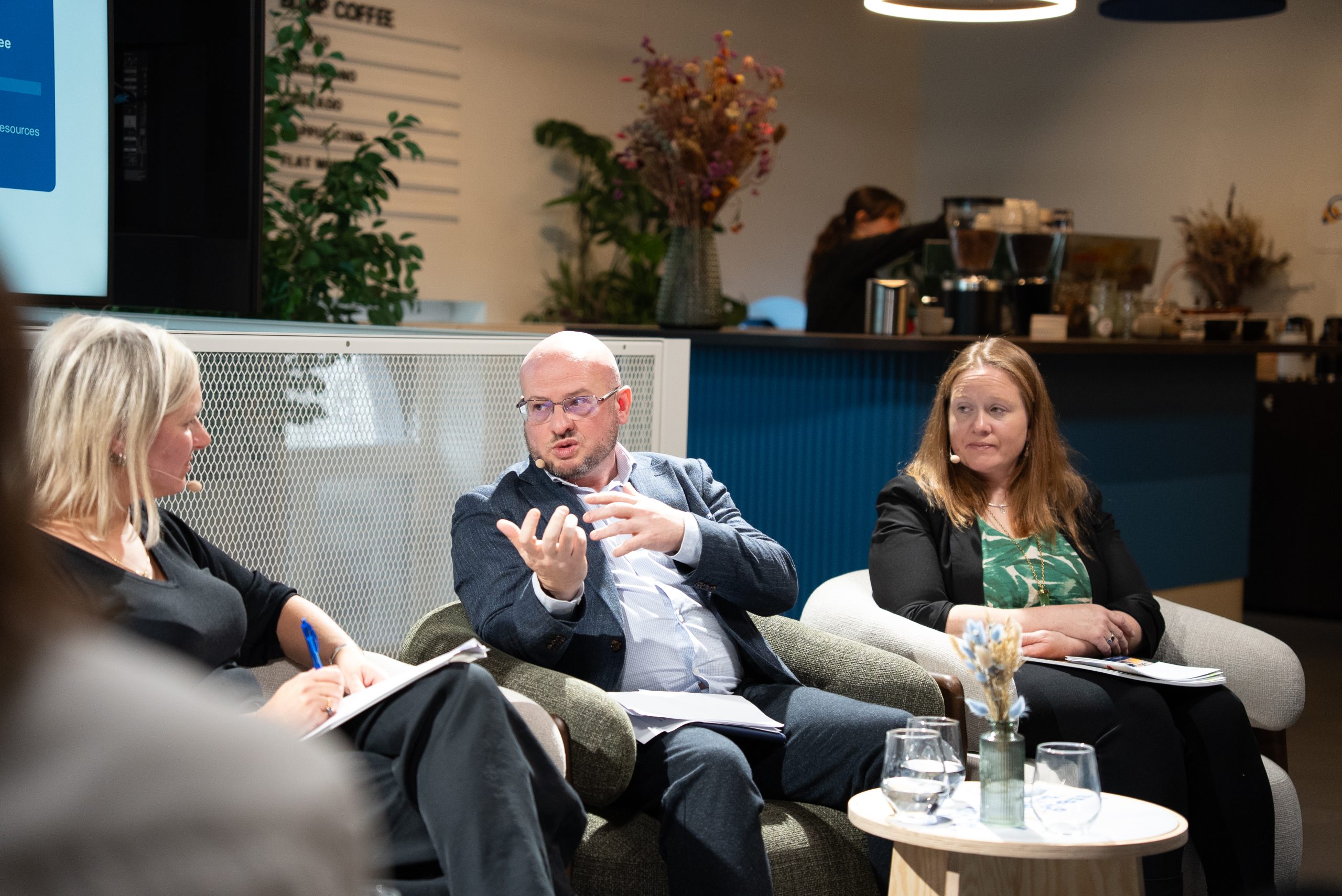
Today, Victim Support Europe joined Euroconsumers in Brussels for two panels under the theme “Put a number on it: The Human and Economic Cost of Scams”, bringing together evidence, lived experience and policy perspectives on the impact of online fraud.
Our Executive Director, Levent Altan, highlighted findings showing that the consequences of scams extend far beyond financial losses. Almost half of scam victims report a moderate to high impact on their mental wellbeing, while victims of extortion and relationship scams can experience lasting consequences affecting their wellbeing, relationships, finances and even physical health.
Victim support is an investment, not simply an expenditure. The cost-benefit analysis launched under the BeneVict project illustrates that every €1 invested in generic victim support is estimated to generate economic benefits of €35.27 in the Netherlands, €38.45 in Portugal and €155.69 in Sweden.
Efthymis Antonopoulos, VSE’s Policy & Advocacy Lead, also shared his personal experience of bank fraud in 2020, speaking publicly about it for the first time.
While working for the International Organization for Migration in Greece, Efthymis received a convincing text message appearing to come from his bank. After following a link and entering his banking details, he realised he had been targeted by a scam. Although the transfer was rejected, the money had already been taken. Despite contacting the bank immediately, the transaction was not stopped and the money was never recovered. Six years later, legal proceedings against the bank are still ongoing in Greece.
But the financial loss was only part of the story. The experience brought panic, shame and self-blame, feelings that were reinforced by the reactions of people around him. It affected his confidence in online payments and continues to shape his everyday behaviour. He no longer has a banking app on his phone.
For years, he kept the experience to himself. It was only after attending an expert meeting organised by UNODC, where he met others with similar experiences, that he began to find a sense of community and the confidence to speak about what had happened. Today, he is turning that experience into advocacy, calling for victim-centred responses, stronger cooperation between institutions, and clear responsibility and accountability for banks, digital platforms and other actors in the digital ecosystem.
His message is clear: being deceived does not make you stupid. It makes you a victim of a crime. We need to move beyond telling people to be more careful. Prevention matters, but so do protection, timely intervention, accessible support and meaningful redress when fraud occurs. The responsibility cannot rest solely on the individuals who have been targeted.
And victim support is not simply an expenditure. As VSE’s BeneVict research demonstrates, investing in victim support generates substantial economic and societal benefits. It helps ensure that people affected by crime receive the support they need, while reducing the wider costs that can follow victimisation.
A safer digital economy is one in which people are protected, supported and never left alone when fraud occurs. Because a society that does not see its victims loses itself.

Image courtesy: Jacques Vermeer
